2025

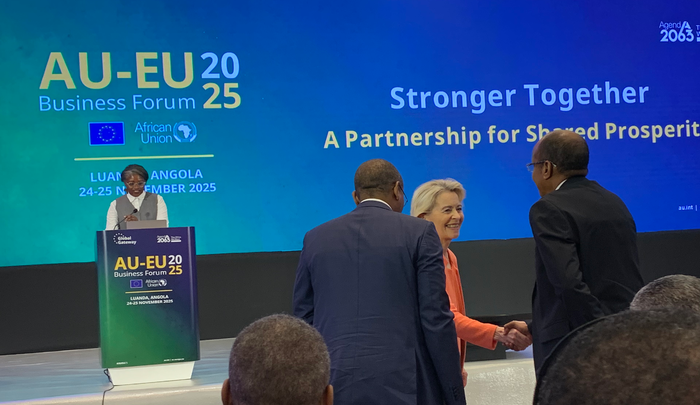
The Guild welcomes the AU-EU Summit’s commitment to enhance collaboration in research and higher education, and stresses their importance in the AU-EU Joint Vision’s concrete implementation to ensure that both continents address central challenges in health, climate, technology and the economy with maximum impact and sustainability.
Today, organisations representing Europe’s research and innovation community present a coordinated set of amendments to the European Commission’s proposals for the 10th EU Framework Programme for Research and Innovation (FP10).

In response to the Commission’s proposal to launch moonshot projects for the next Horizon Europe programme (FP10), The Guild proposes four societal moonshots which address interdisciplinary challenges and align technological progress with societal welfare.

With its latest Insight Paper, The Guild universities wish to start a different type of narrative about the European Universities initiative, an institutional perspective which more openly embraces what is possible and realistic. The paper asks how universities themselves, particularly research-intensive institutions have experienced the initiative.
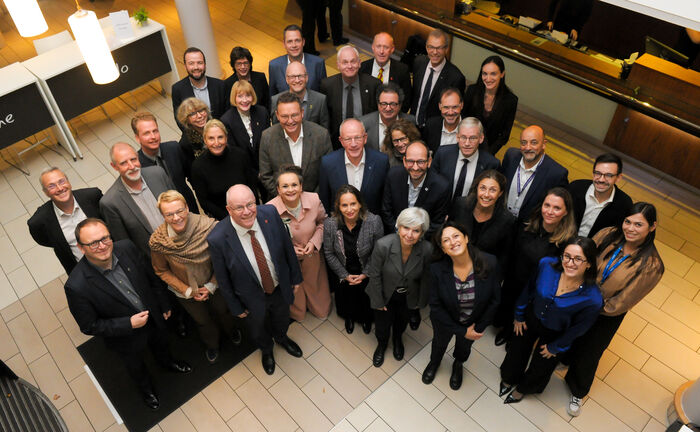
At their recent General Assembly, the Presidents of The Guild convened at the University of Warwick to exchange views on the next Framework Programme for Research and Innovation (FP10), Erasmus+ programme and their alignment with the European Competitiveness Fund (ECF).

With the start of the academic year, three new rectors have taken office at our member universities: Ghent University, the University of Glasgow, and the University of Oslo. We look forward to working with them to advance research, innovation, and higher education policy in Europe.

The Guild and ARUA are delighted to introduce the latest addition to the Africa-Europe Clusters of Research Excellence (CoRE): the CoRE in Integrative Conservation Biology Research and Training. The new CoRE answers a call from over 200 researchers on both continents to safeguard Eastern Africa’s biodiversity amid climate change, while addressing local community needs.

The Guild has submitted its response to the European Commission’s Call for Evidence on the Digital Omnibus - Digital Package on Simplification, highlighting that legal uncertainties are of equal challenge to the research community, especially universities.

The Guild has submitted its response to the European Commission’s Call for Evidence on the future European Innovation Act, urging policymakers to fully recognise universities as central drivers of innovation across Europe. The Act must place R&I at the heart of Europe’s economy and deliver on the realisation of the “fifth freedom” to improve the Single Market.

The Guild calls on the European Commission (EC) to develop a comprehensive EU Cardiovascular Health Plan, providing a coordinated EU-level response that leverages research and innovation (R&I) across prevention, early detection, treatment, and long-term care.

The Guild welcomes the Commission’s proposal for a stand-alone Horizon Europe 2028-34 (FP10). Next week, the COMPET Council will address key questions raised by the proposal itself, and its relation to the European Competitiveness Fund. We assert six priority areas that the Members States and European Parliament must not compromise.

The Guild welcomes the European Commission’s proposal for the Erasmus+ programme (2028–34), published in July 2025. While the proposal marks an important step forward, The Guild urges the Commission to address several critical issues to ensure the programme’s success.

The Guild is delighted to announce that early-career African researchers affiliated with the Africa-Europe Clusters of Research Excellence (CoRE) are now eligible to apply for the Early-Career Research Fellowships programme, launched by the African Research Universities Alliance (ARUA) in July 2025 with support from the Mastercard Foundation and the Carnegie Corporation of New York.

On 2 September, The Guild and the League of European Research Universities (LERU) kicked off the discussions on the next Multiannual Financial Framework (2028-34) at the “After the MFF proposal: Envisioning the future Horizon Europe and Erasmus+” conference in Brussels.

As threats to academic freedom intensify worldwide, The Guild urges the EU and national governments to take firm steps to safeguard academic freedom and strengthen Europe’s appeal to top researchers.

On 16 July, President Ursula von der Leyen presented the European Commission’s proposal for the post-2027 multi-annual budget of the European Union: the multiannual financial framework (MFF). In line with her ambition to put research and innovation (R&I) at the heart of Europe’s economy, the next framework programme for R&I keeps its name – Horizon Europe – and its distinct budget and legal basis.

As the European Union considers the shape of its post-2027 programmes, The Guild urges a strengthened commitment to the international dimension of Erasmus+, highlighting its strategic value in advancing global cooperation and sustainable development.
The Guild and LERU, supported by university and innovation networks, have published a set of recommendations to tightly connect the European Competitiveness Fund (ECF) to the next Framework Programme for Research and Innovation (FP10).
Joint statement warns that introducing directionality in MSCA would risk undermining the programme’s success.
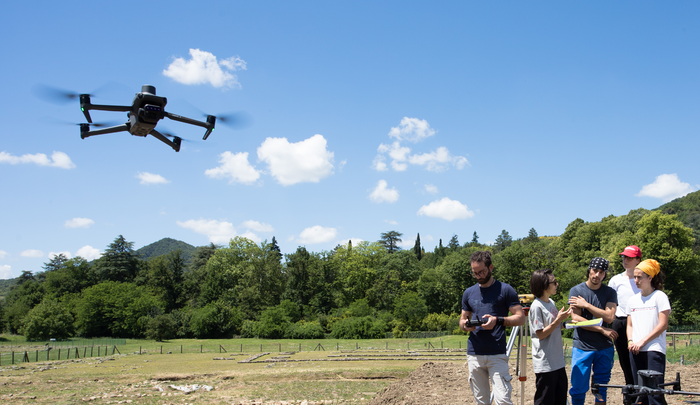
With major elections shaping new political agendas over the past year, The Guild worked to ensure that universities’ voices were heard, placing research, innovation, and education at the heart of Europe's future.

In a joint statement released today, CESAER and The Guild member universities call on the European Commission and the Member States to ensure widely spread and predictable call deadlines of Research and Innovation (R&I) Framework Programmes. They also urge an adjustment in the timing of these call deadlines to further support the professionalisation of research management, thereby enhancing European excellence and competitiveness.
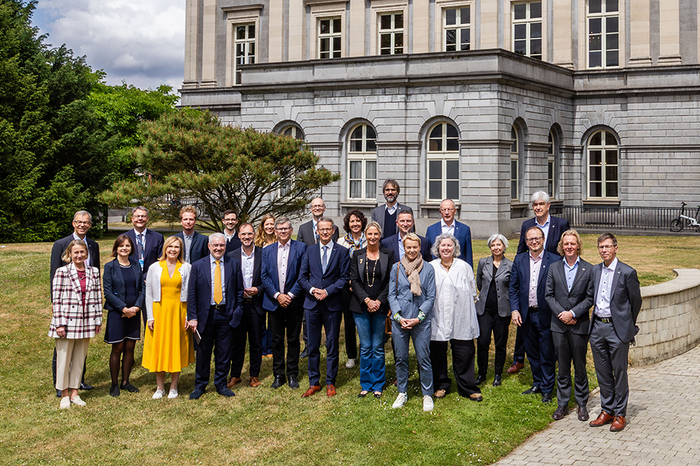
On 22-23 May, university leaders from The Guild and LERU joined to celebrate the joint 600th anniversary of UCLouvain and KU Leuven. With other leading voices from the sector in Europe and beyond, and with key European policymakers, they discussed the future of research, innovation and higher education in a fast-changing geopolitical context.
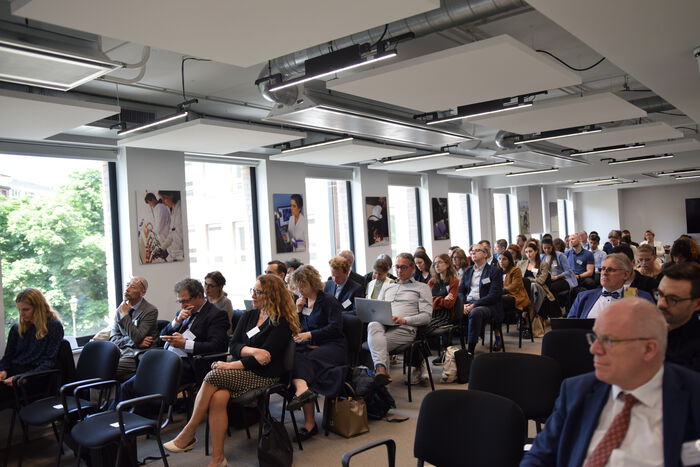
On 20 May - International Academic Freedom Day, policymakers and academic leaders gathered in Brussels to reaffirm Europe’s commitment to the freedom of scientific research. Hosted by The Guild in collaboration with Université PSL and Institut Curie, the high-level event spotlighted how shifting geopolitical dynamics, notably in the US, are endangering the free pursuit of research , the autonomy of universities and the integrity of scientific inquiry.

In March 2025, The Guild and LERU jointly published a powerful open letter, supported by national rectors’ conferences representing over 1,000 universities across Europe, other European university networks, and personally signed by more than 200 university leaders.