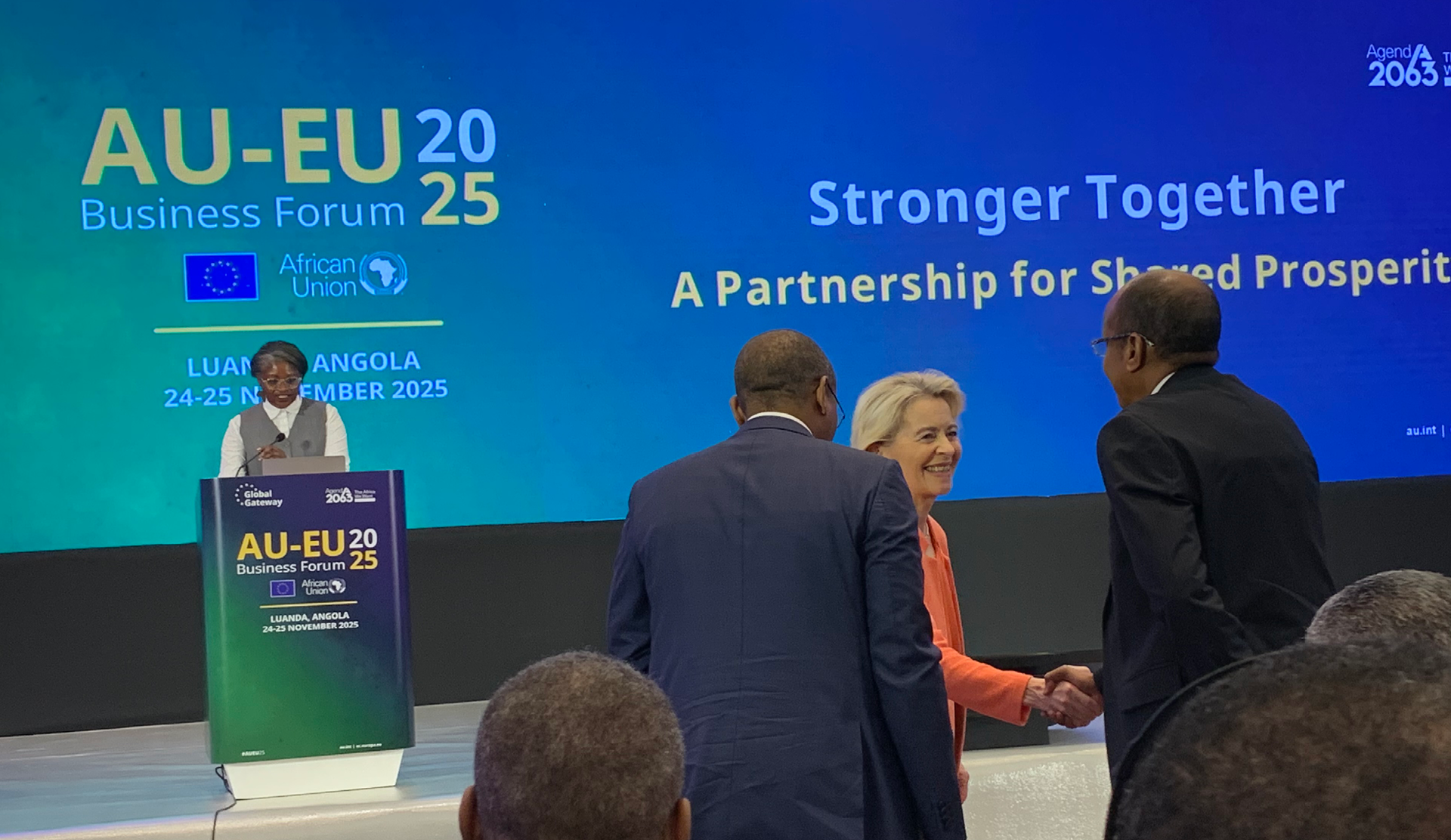
The Seventh AU-EU Summit, hosted by Angola, marked 25 years of partnership between the two continental unions. Leaders agreed on a Joint Vision for 2030, including the long-term commitment to the landmark AU-EU Innovation Agenda.
The Guild welcomes the 2025 Summit declaration’s high-level commitments to “investing in education, research, science, technology, and skills development to drive further scientific discoveries and innovative solutions”. Both Unions clearly recognise the importance of “partnerships between universities and research organisations to foster mutual understanding and excellence”. Importantly, they recognise the need to work closely together in areas that must be supported by strong collaboration and research, notably, “the development of regional innovation ecosystems including on human-centric and trustworthy artificial intelligence”, to achieve a digital transformation.
Political leaders also acknowledged the “importance of enhancing legal pathways for migration and mobility, in line with national competences, between our two continents, and within the African continent”. We welcome an explicit recognition of the need for mobility “especially for higher education students, academics, researchers and staff” with reference to the AU-EU Innovation Agenda’s objectives to achieve better brain circulation so that talented people across regions of both continents have an opportunity to make achievements and contribute.
We welcome this declaration as a strong rearticulation of the AU-EU Innovation Agenda. Research, innovation and higher education can reinforce the strategic goals around the key challenges faced by various sectors. We also welcome the Vision building on other recent ambitious policies, notably the African Union’s Science, Technology and Innovation Strategy for Africa (STISA 2034), and the Africa CDC’s Africa's Health Security and Sovereignty agenda. Both articulate the pathway for African states to increase domestic financing and foster new models of global partnerships in research and innovation.
But much remains to be done to translate these important agendas to concrete implementation. The Global Gateway has invested €300 billion, but education and research still remains a largely untapped opportunity for strategic investments. And, while we welcome the Africa Initiative in Horizon Europe, as well as the renewal of the ARISE grants, these constitute less than 0.5% of the Global Gateway’s investment. Researchers and universities on both continents must be better involved in the collaborations across Africa and Europe, as they have the unique capacity to strengthen cutting-edge know-how co-produced by Africans and Europeans, and educate a skilled and resilient workforce. Through their capacity to foster equitable collaboration in practice, research and higher education also add value to, and mitigate the risks for, most of the ambitions of societal benefit and investment opportunities expressed in the declaration.
Multilateralism, economic relations and international cooperation have been under pressure and in flux since the last AU-EU Summit. G20 meetings in South Africa had to overcome challenges, for example when most countries joined with the AU and EU to uphold the importance of equitable, collective action to address issues of climate change, public health, emerging technologies and skills needed for the future. The EU and AU are uniquely positioned to make such efforts real, but such collaboration cannot be taken for granted, it requires concrete action by governments, private sector actors, civil society and the research community with a long-term perspective.
With the AU-EU Innovation Agenda entering its third year we are progressing from its short-term to medium-term objectives. The AU and EU must:
- Ensure African and European governments widen and enhance support for equitable research, innovation and higher education partnerships to produce better returns on socio-economic investments and diplomacy
- Collectively dedicate efforts towards medium-term AU-EU Innovation Agenda objectives such as ensuring technology transfer to discover and develop excellent African vaccines through Manufacturing and access to vaccines, medicines and health technologies (MAV+), and co-designing scalable digital solutions with food system actors on both continents
- Support the mobility of students, researchers and staff by building on existing programmes such as the doctoral networks of Marie Skłodowska-Curie Actions, which deliver the excellence and the skills needed for the competitiveness and prosperity of both continents. Any controls and conditions on migration agreed by European and African countries must not block talent from interacting across borders, rather it should incentivise widespread knowledge societies that generate job opportunities, more sustainable institutions and the capacity for many countries to contribute public goods collectively to our shared challenges.
The AU-EU Summit declaration sets the scene for both continents to work over the next six months to develop implementation plans for Sectoral Areas of Cooperation. The Guild is committed to supporting this process with concrete suggestions and solutions. We look forward to opportunities for the research, innovation and higher education community to contribute towards their own sector and working with other sectors.