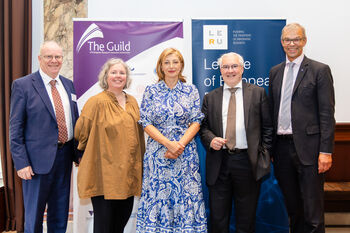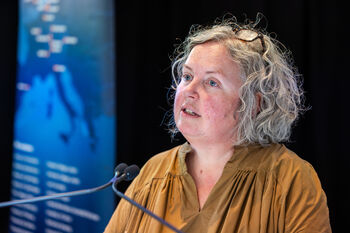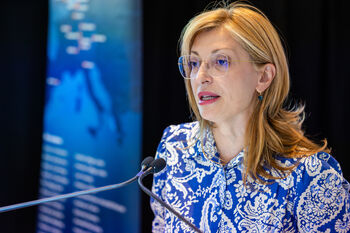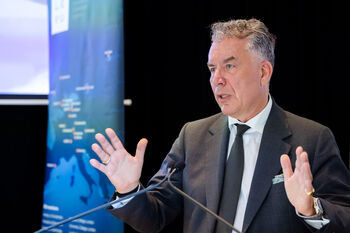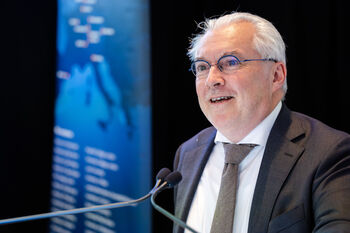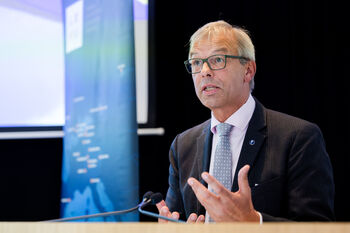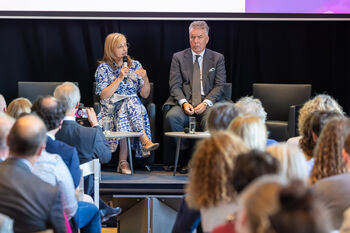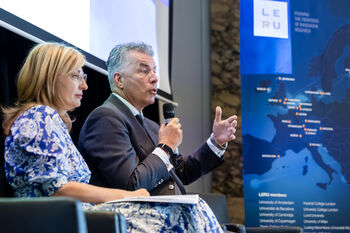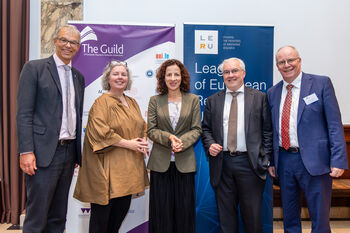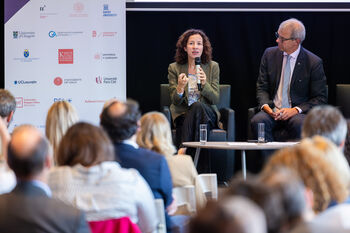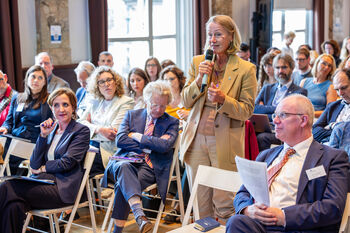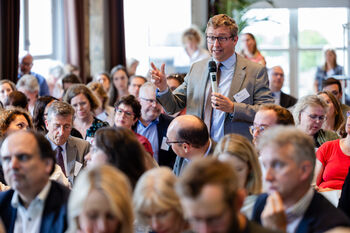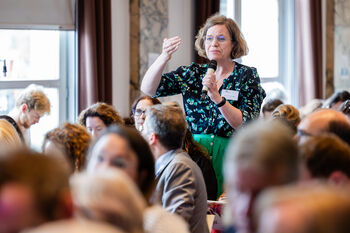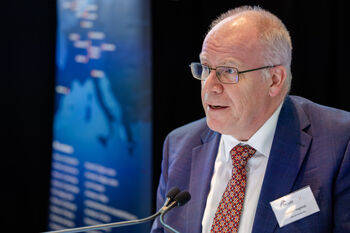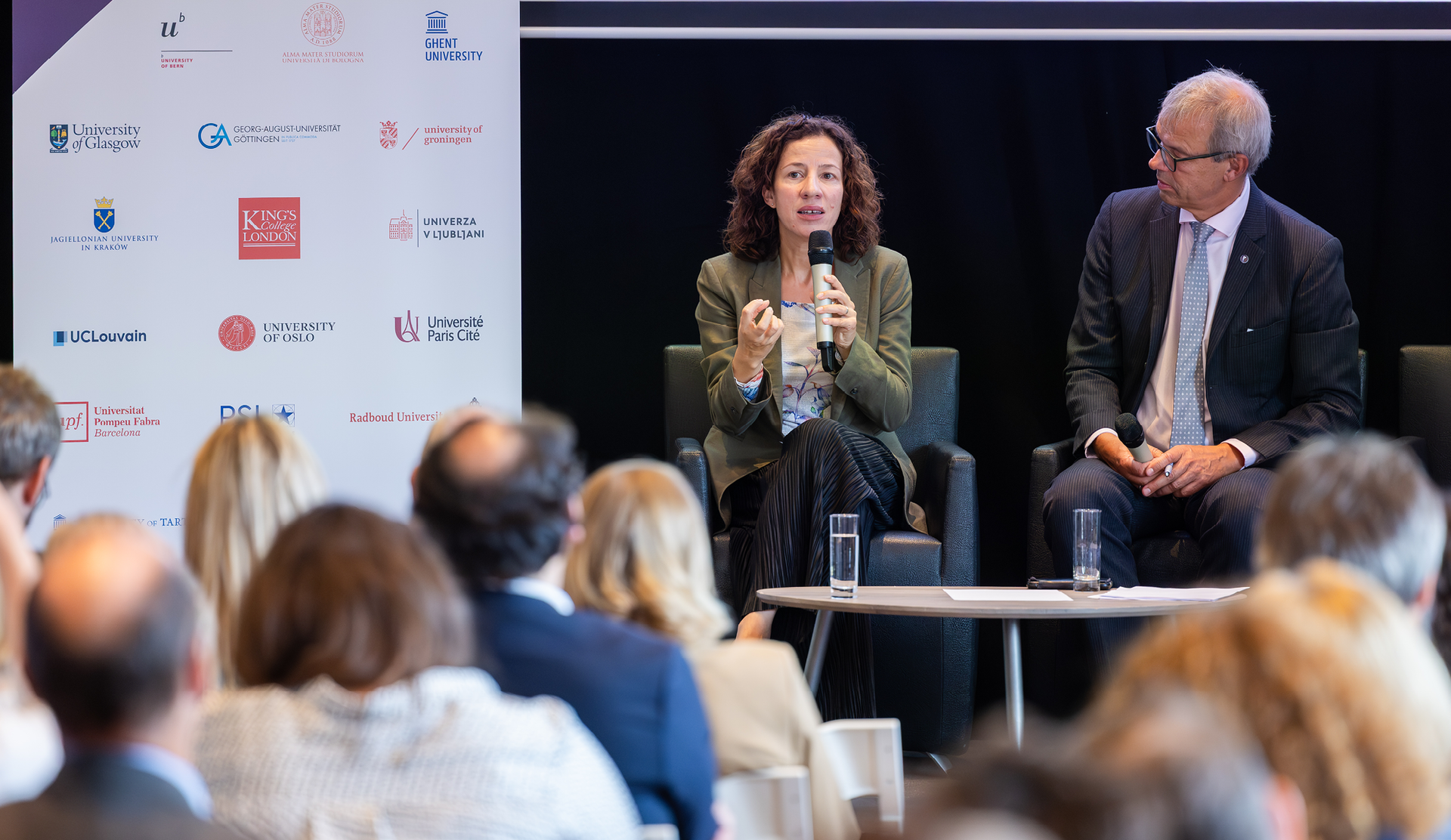
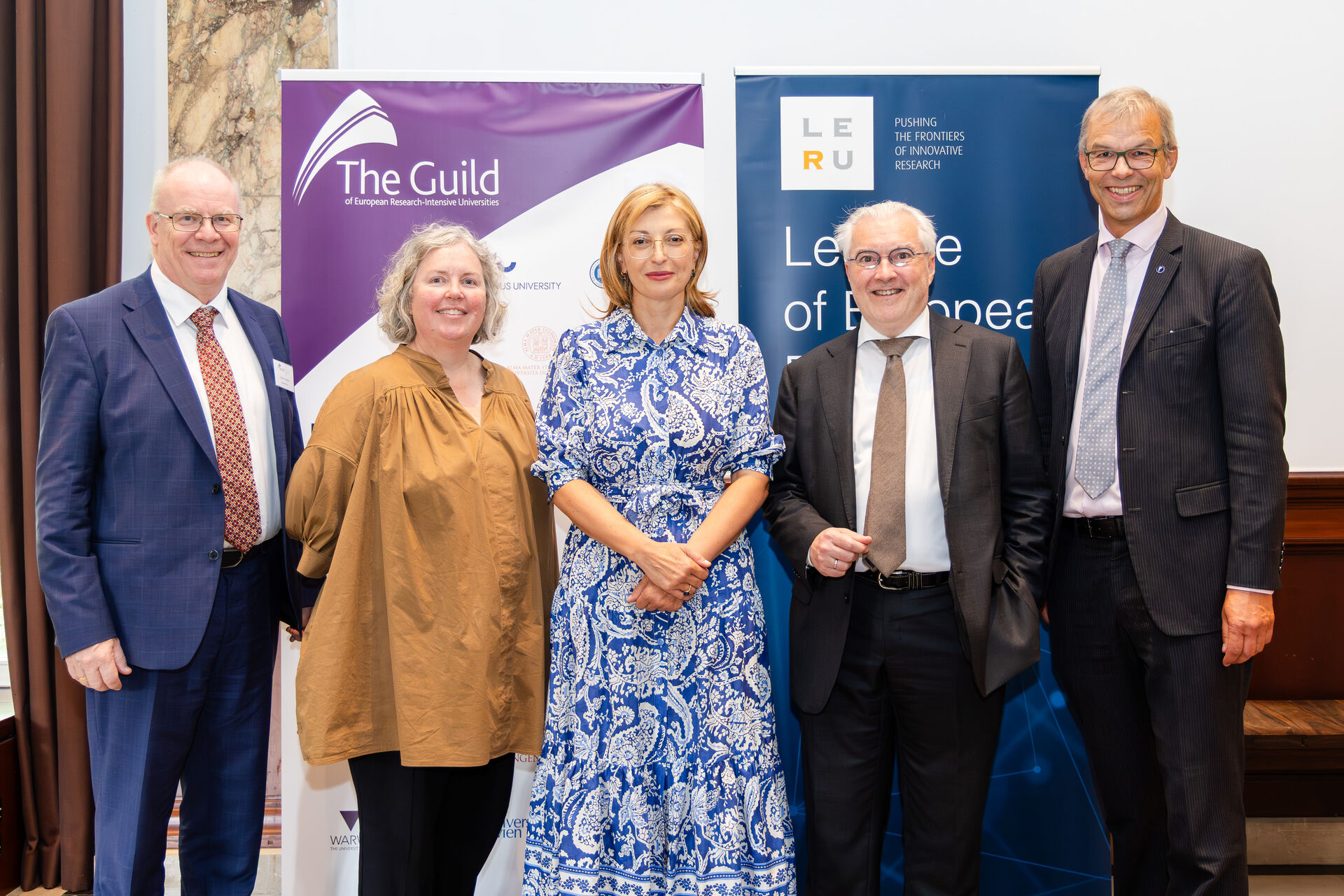
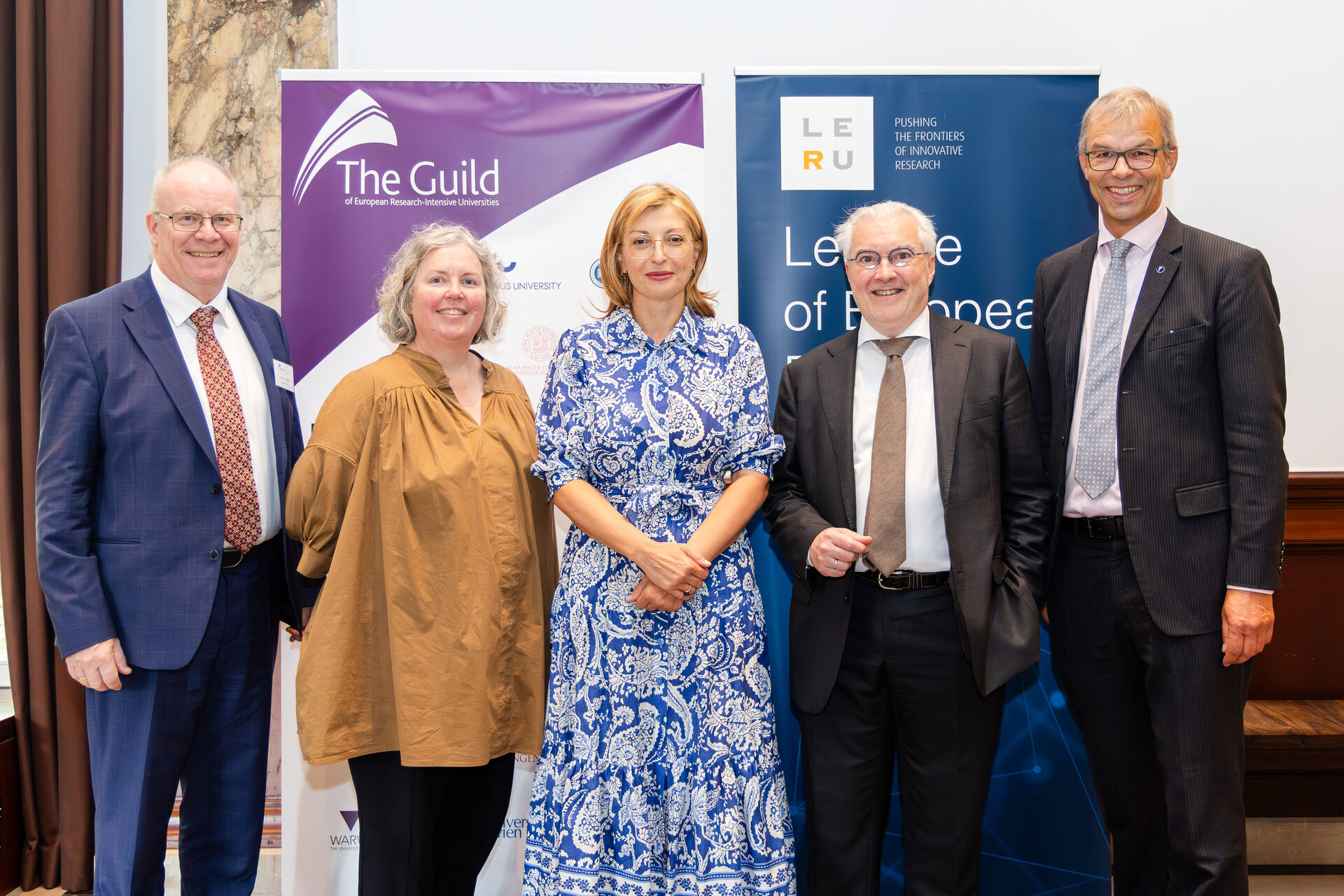
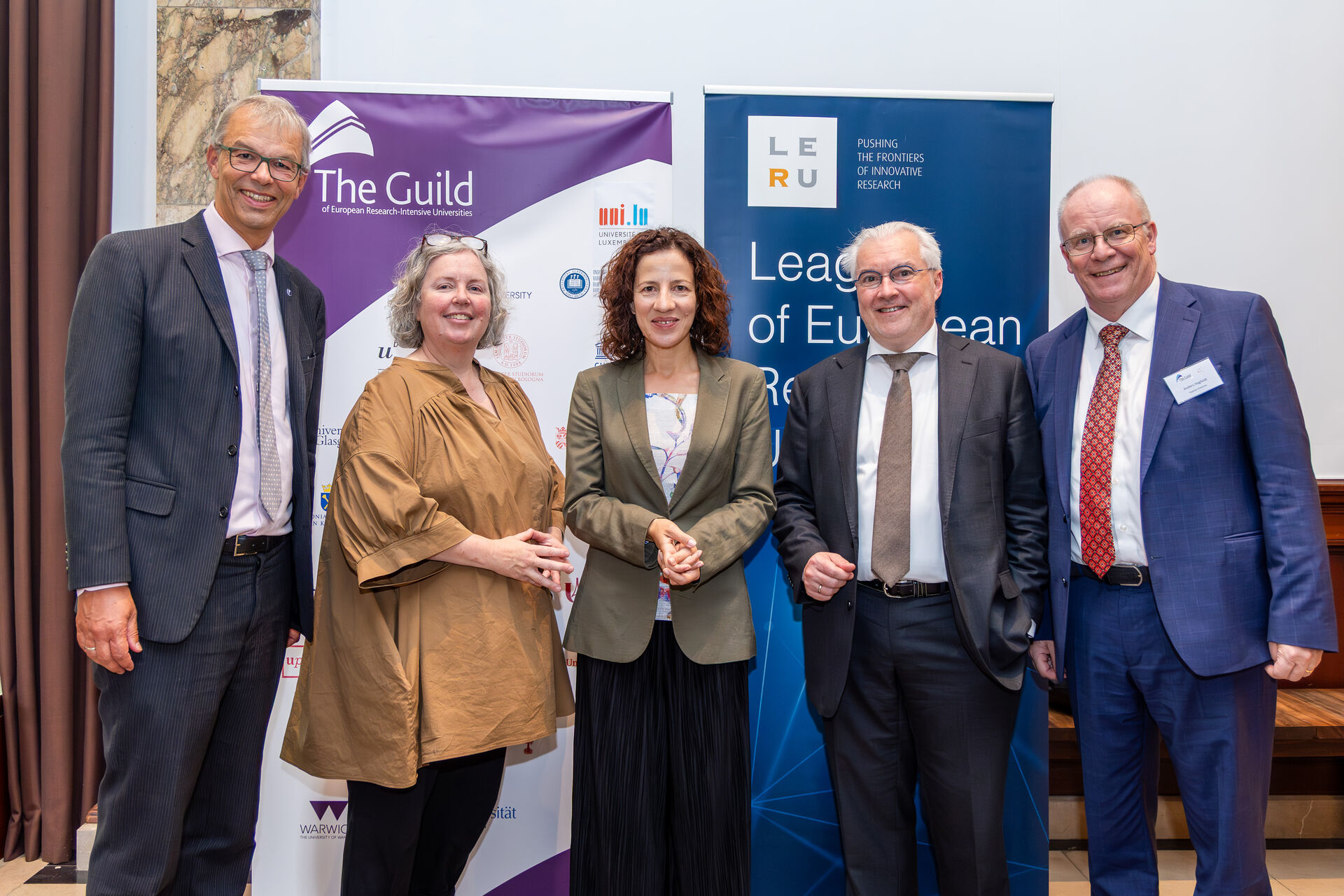
To celebrate the new academic year, The Guild and LERU organised the first public event on the Commission's proposals for the post-2027 Horizon Europe and Erasmus+ programmes. The event provided the opportunity for stakeholder organisations, policymakers and academics to share their insights and engage directly with Commissioner Zaharieva, Executive Vice-President Mînzatu and MEP Ehler.
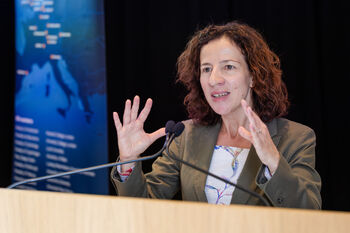
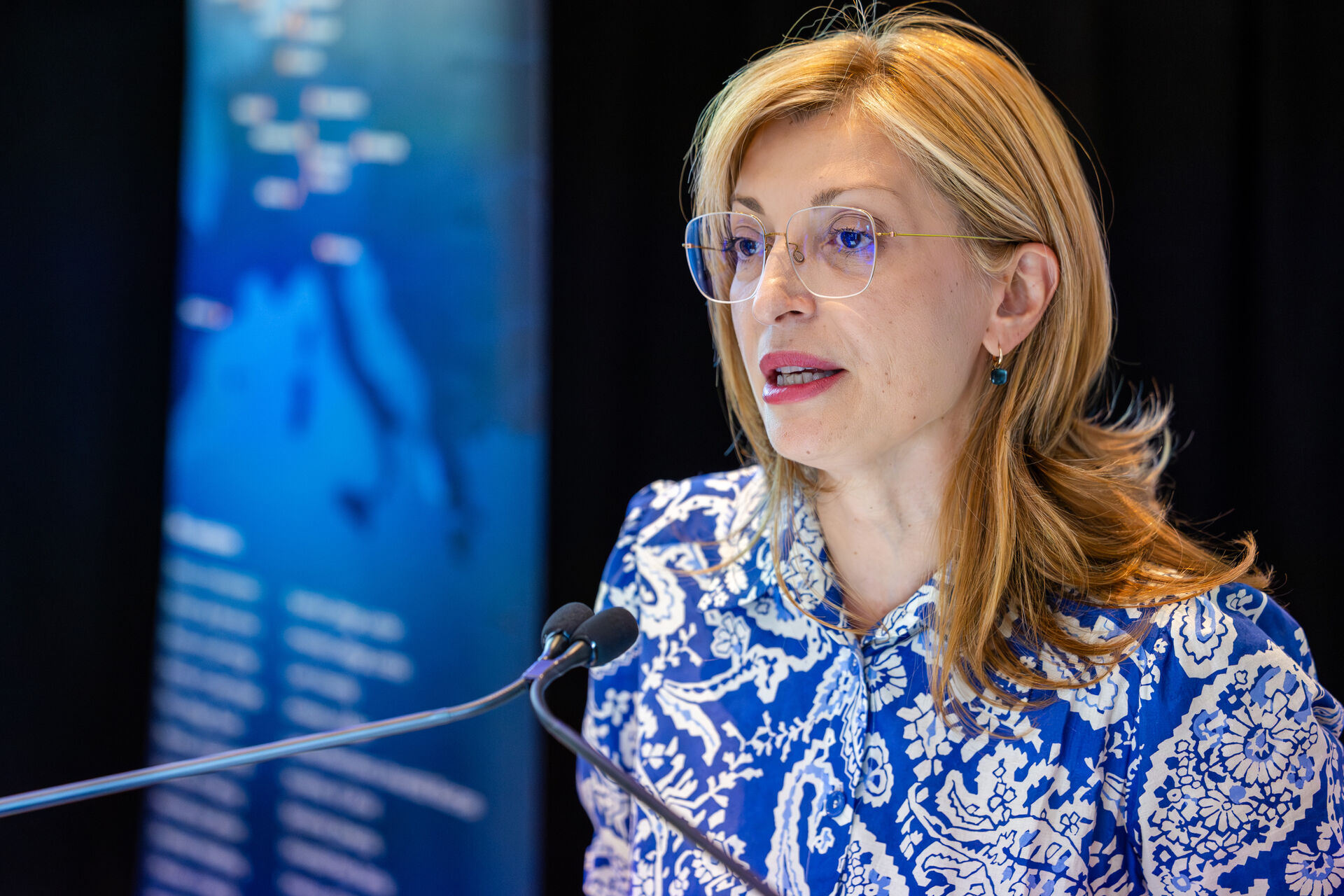
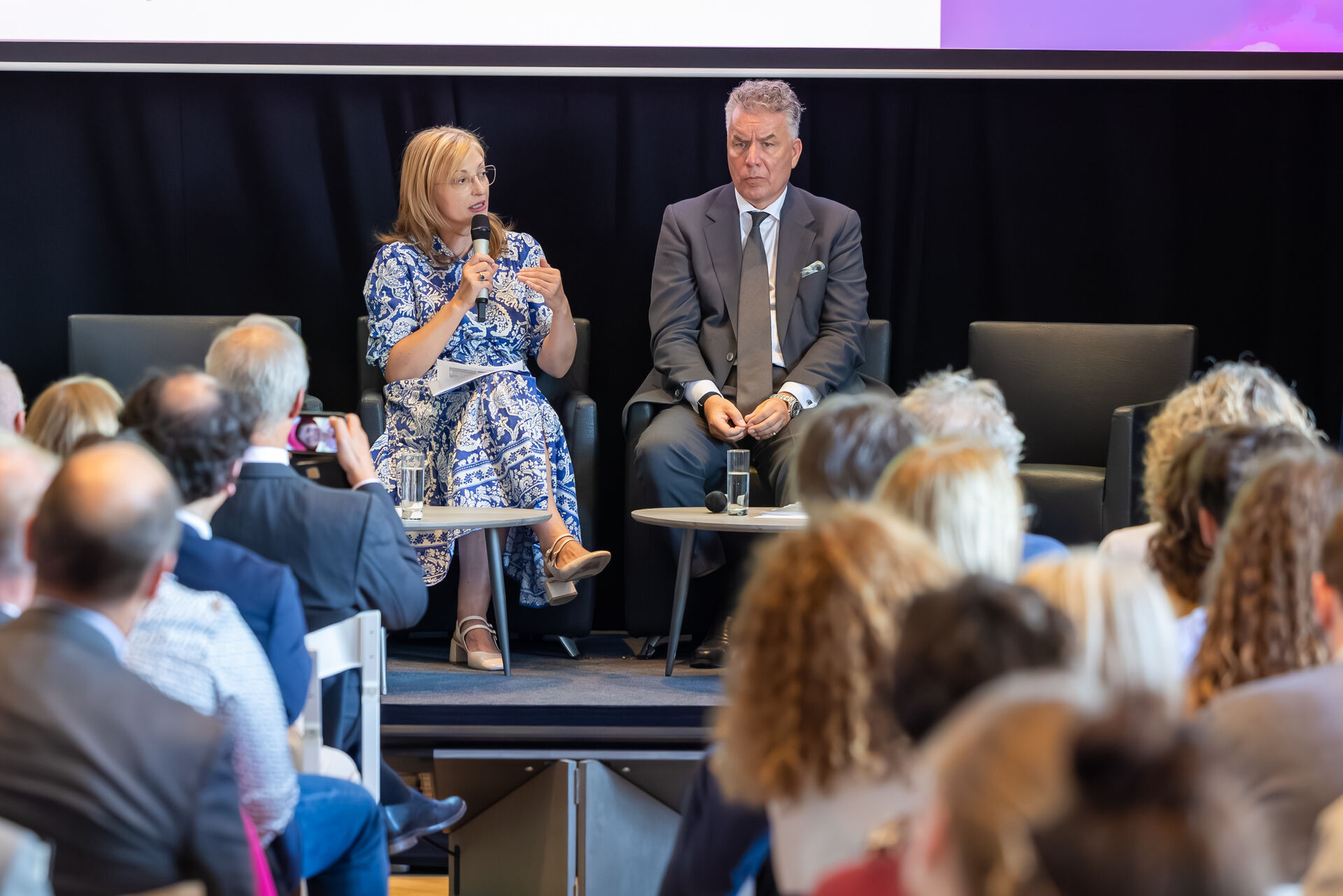
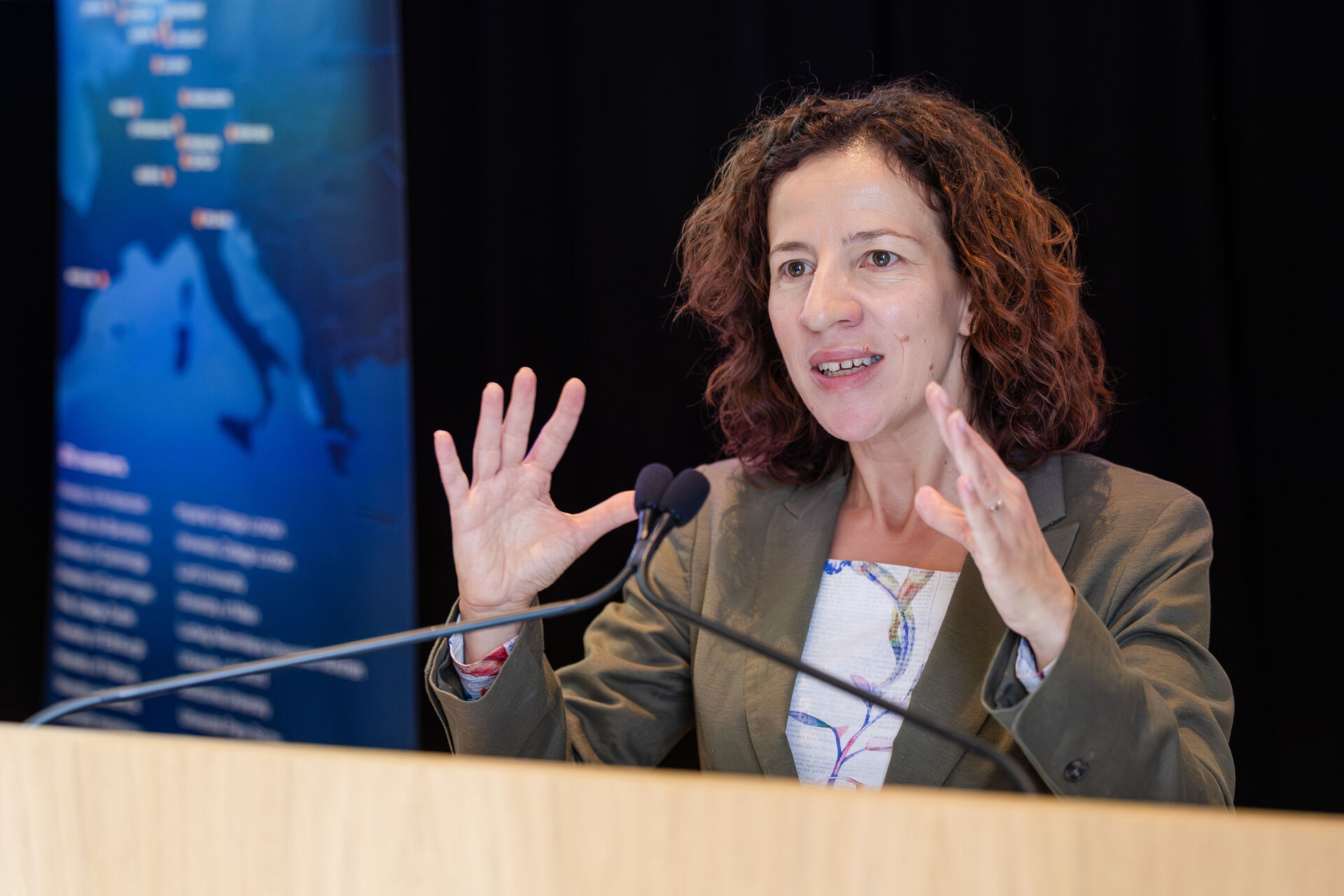
In her keynote address Commissioner for Startups, Research and Innovation Ekaterina Zaharieva underscored Horizon Europe’s pivotal role in strengthening Europe’s global competitiveness. She advocated for a simplified and more agile programme, asserting that “Horizon Europe must be stronger, bolder and more effective than ever". She also stressed the need to make the programme simpler because “researchers should focus on science, not paperwork.” Key proposals include preserving a similar pillar structure and reinforcing the instruments that have demonstrated their success and relevance, including doubling the European Research Council (ERC) budget and expanding the European Innovation Council (EIC) to accelerate disruptive innovation. Zaharieva also called for stronger private-public partnerships and a more tailored approach towards participation of Widening countries.
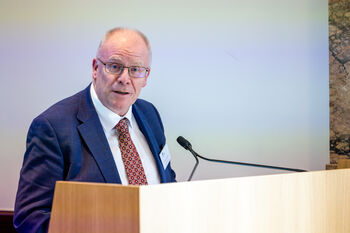
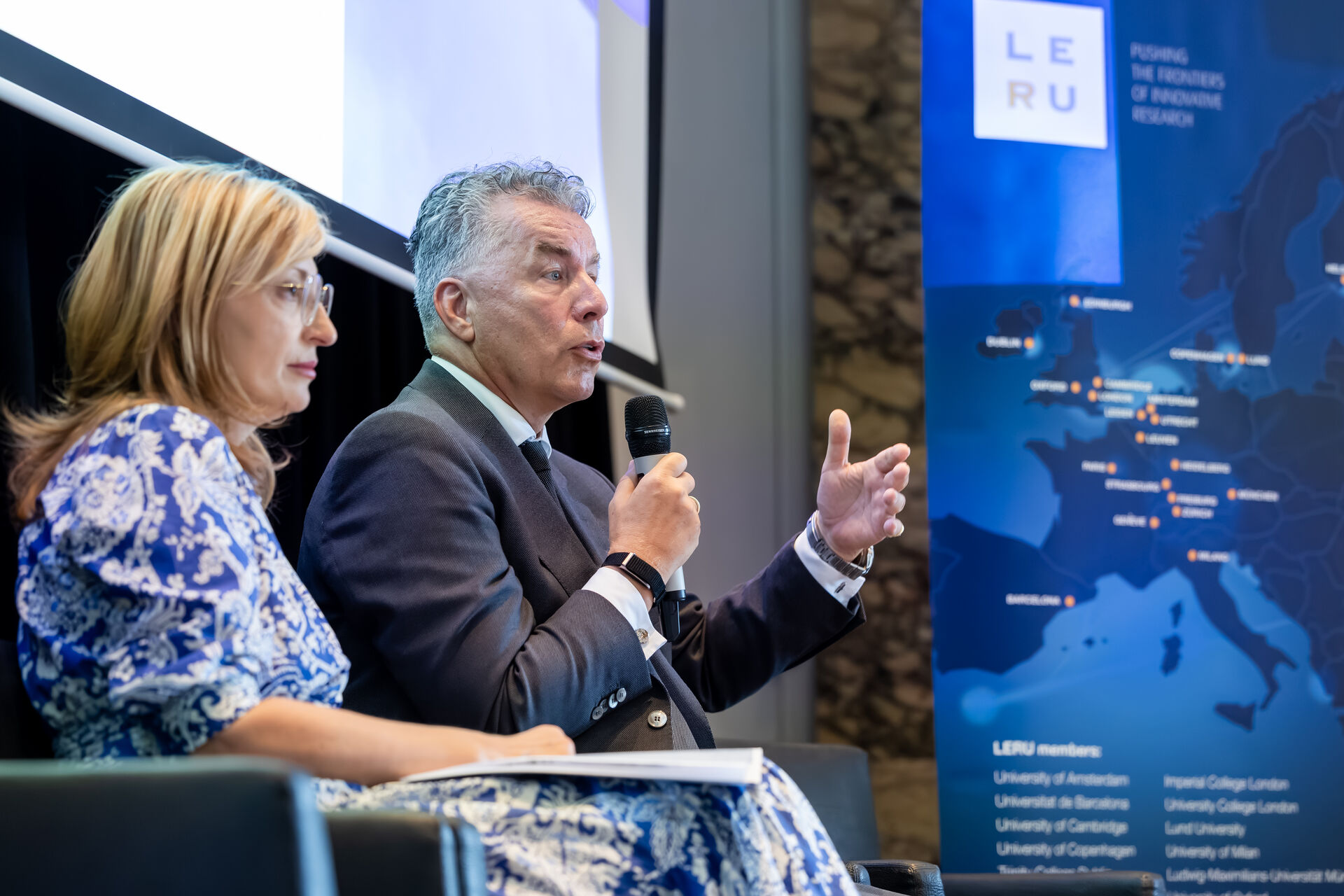
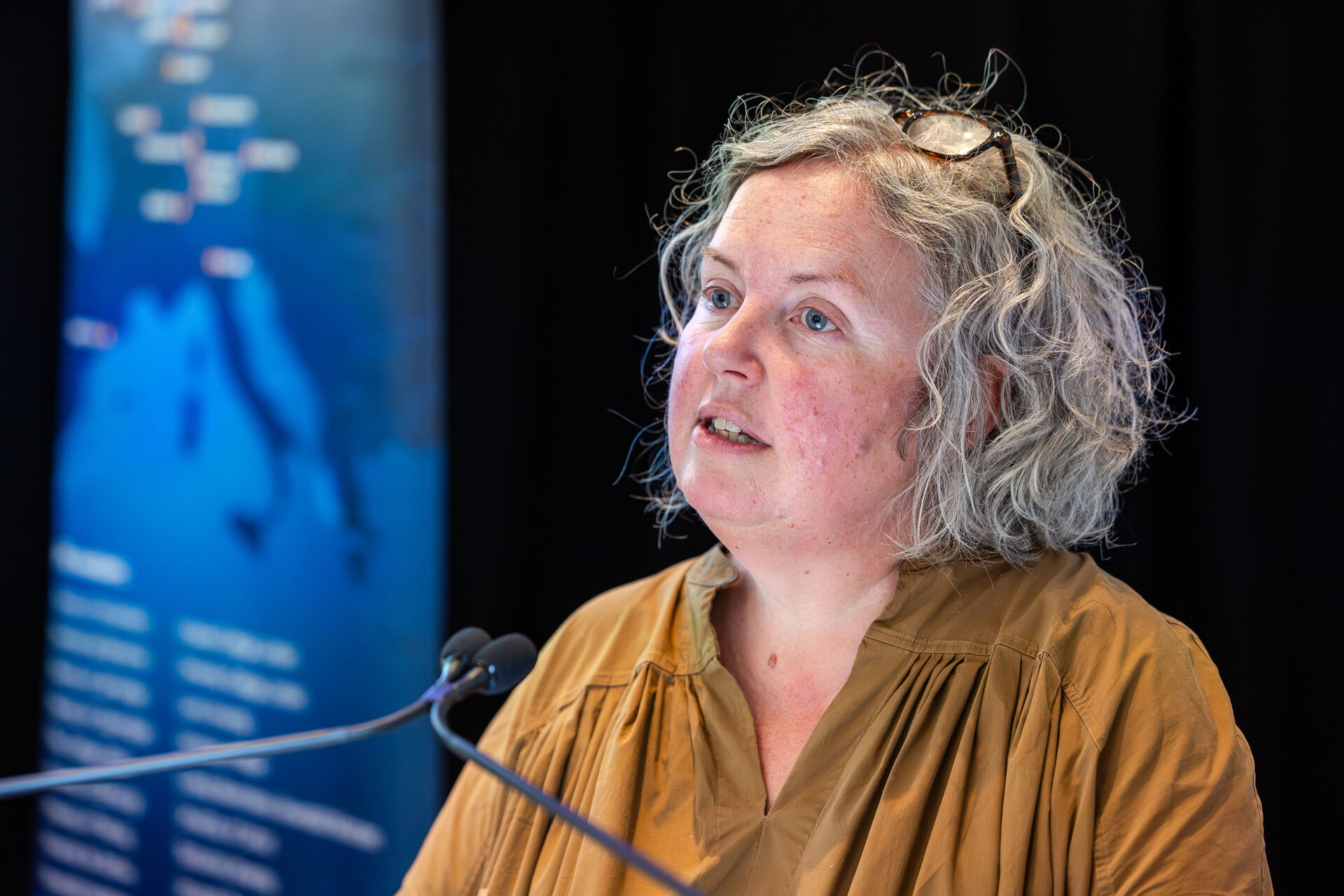
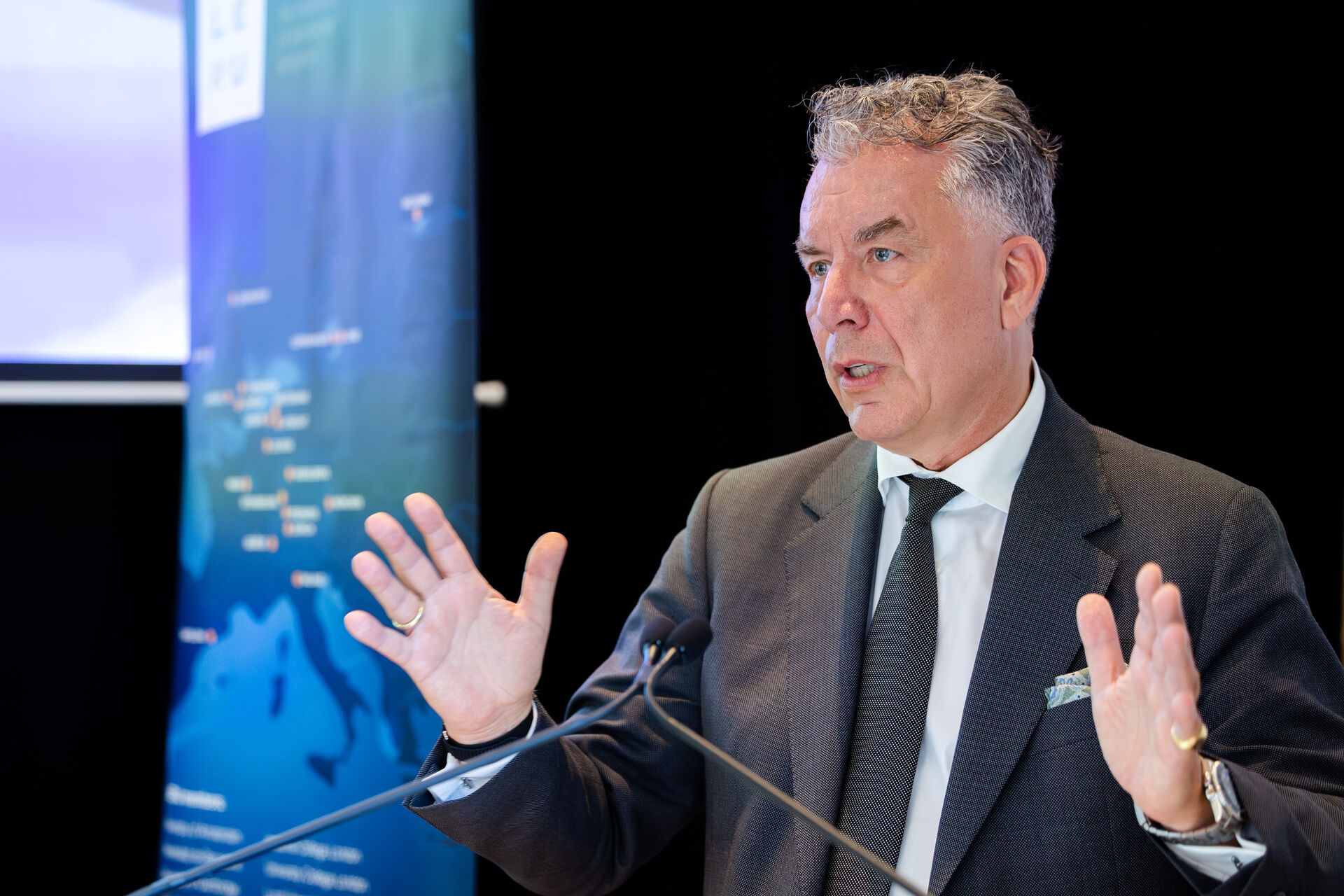
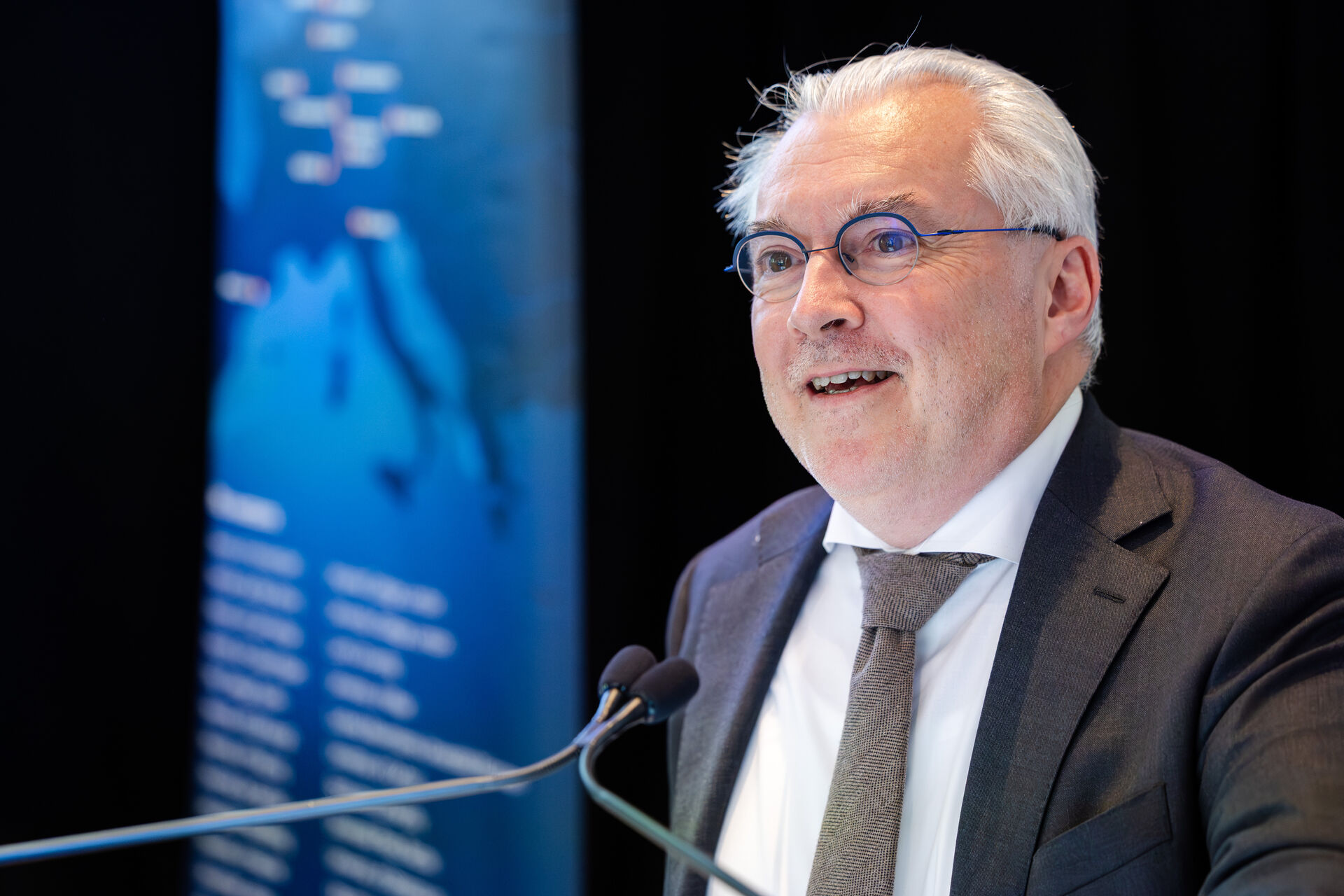
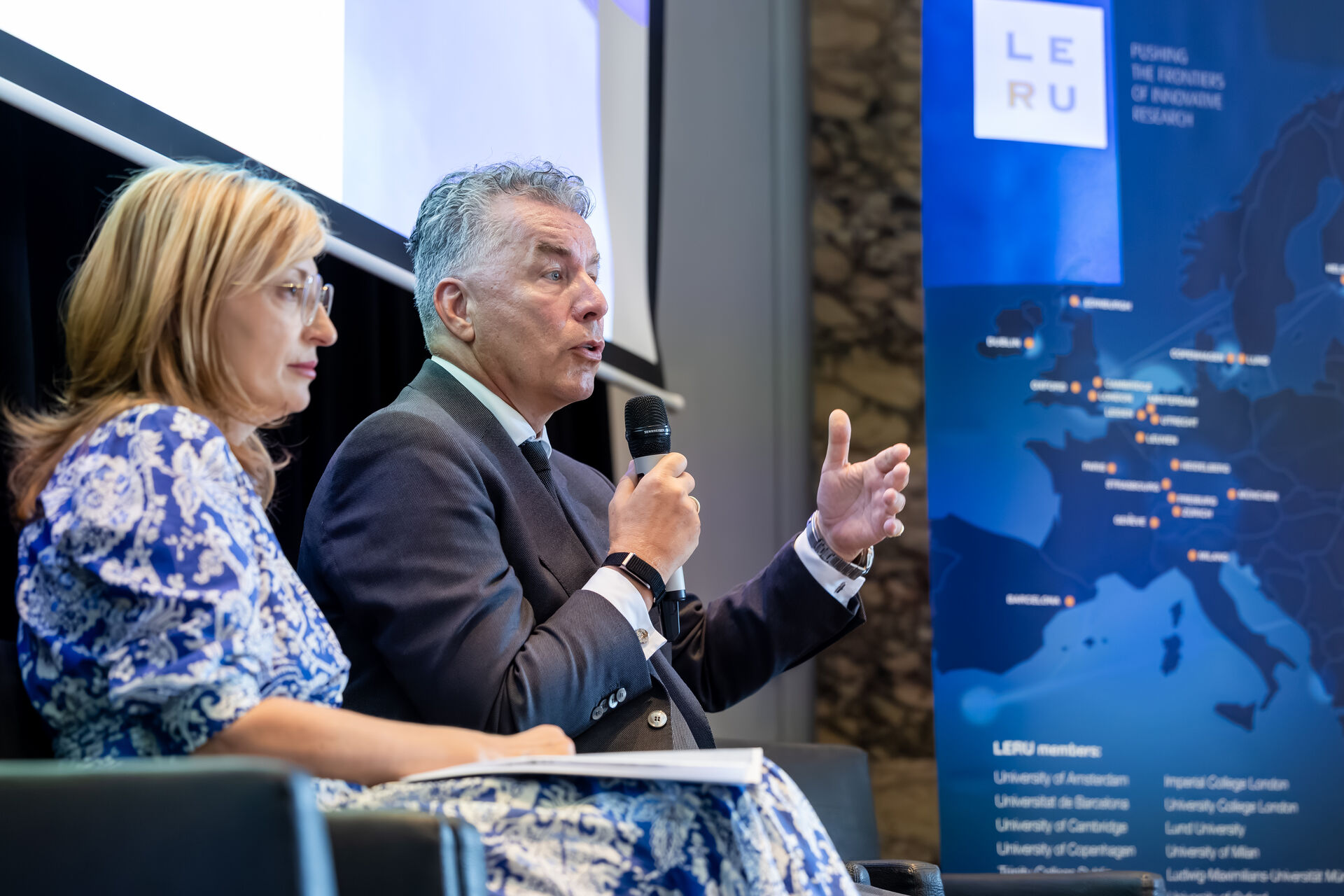
Christian Ehler, Member of the European Parliament, began by strongly welcoming the FP10 regulation: in securing an ambitious budget, a stand-alone R&I programme and a broad balance between bottom-up and top-down instruments, alleviating big concerns of the sector. Commenting on the proposals in detail, Ehler echoed Zaharieva’s remarks, calling for a competitive R&I Framework Programme aligned with Europe’s industrial strategy, while also warning against viewing Horizon Europe as nothing more than instrumental to EU industrial policies. He highlighted inconsistencies between the call for a tightly connected FP10 to the European Competitiveness Fund (ECF) and the imprecise definition of these connections in their respective proposed regulations. He also shared concerns about the expansion of the Horizon Europe scope to dual-use projects and even defence research and technologies. Because of their lack of precision, Ehler stated these proposals “simply cannot be accepted as a legal text.” Prof. Kurt Deketelaere, Secretary-General of LERU supported these concerns, pointing to the regulatory vagueness, and the absence of a detailed budgetary breakdown for key EU programmes such as the ERC, MSCA and EIC. Budgetary and regulatory ambiguity, which he considers solvable. This does not apply to the so-called “tight connection” between FP10 and the ECF, which he believes needs to be completely revised.
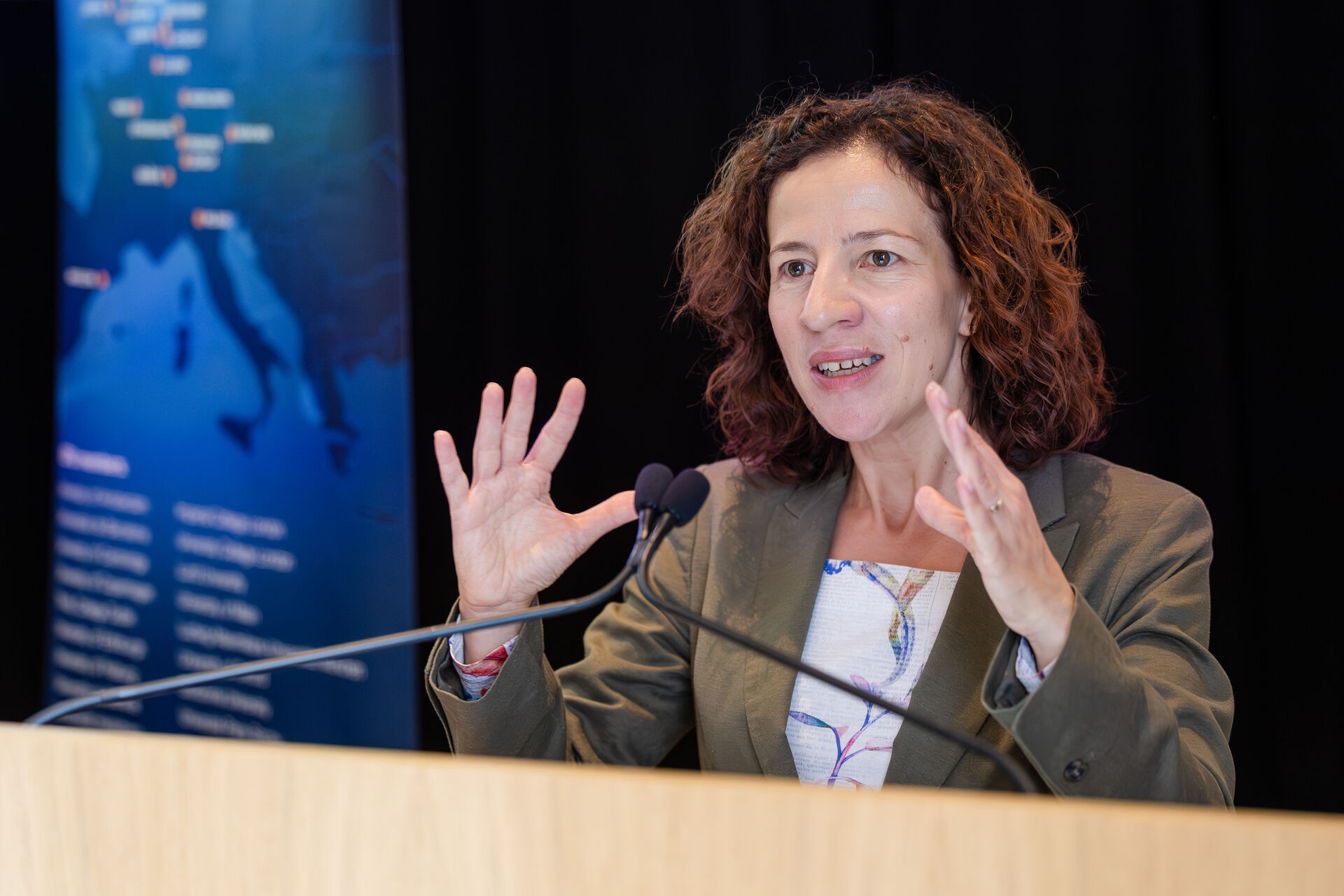
On the future of European education policy, Executive Vice-President for Social Rights and Skills, Quality Jobs and Preparedness Roxana Mînzatu stressed the need for increased investment and reduced bureaucracy, declaring that "every euro invested in education is a euro invested in Europe’s future." Mînzatu stressed the need to fight for the proposed budget for Erasmus+, given the political focus on items such as defence, resilience, and competitiveness. She also emphasised her intention not to drastically shift the proportion of existing allocations, noting that new ideas needed to have time to grow and mature. She also invited the sector to develop new initiatives in partnership with the Commission, such as the STEM Scholarships. Finally, she emphasised the importance of the global dimension of Erasmus+, acknowledging the need to loosely connect it also to Global Europe.
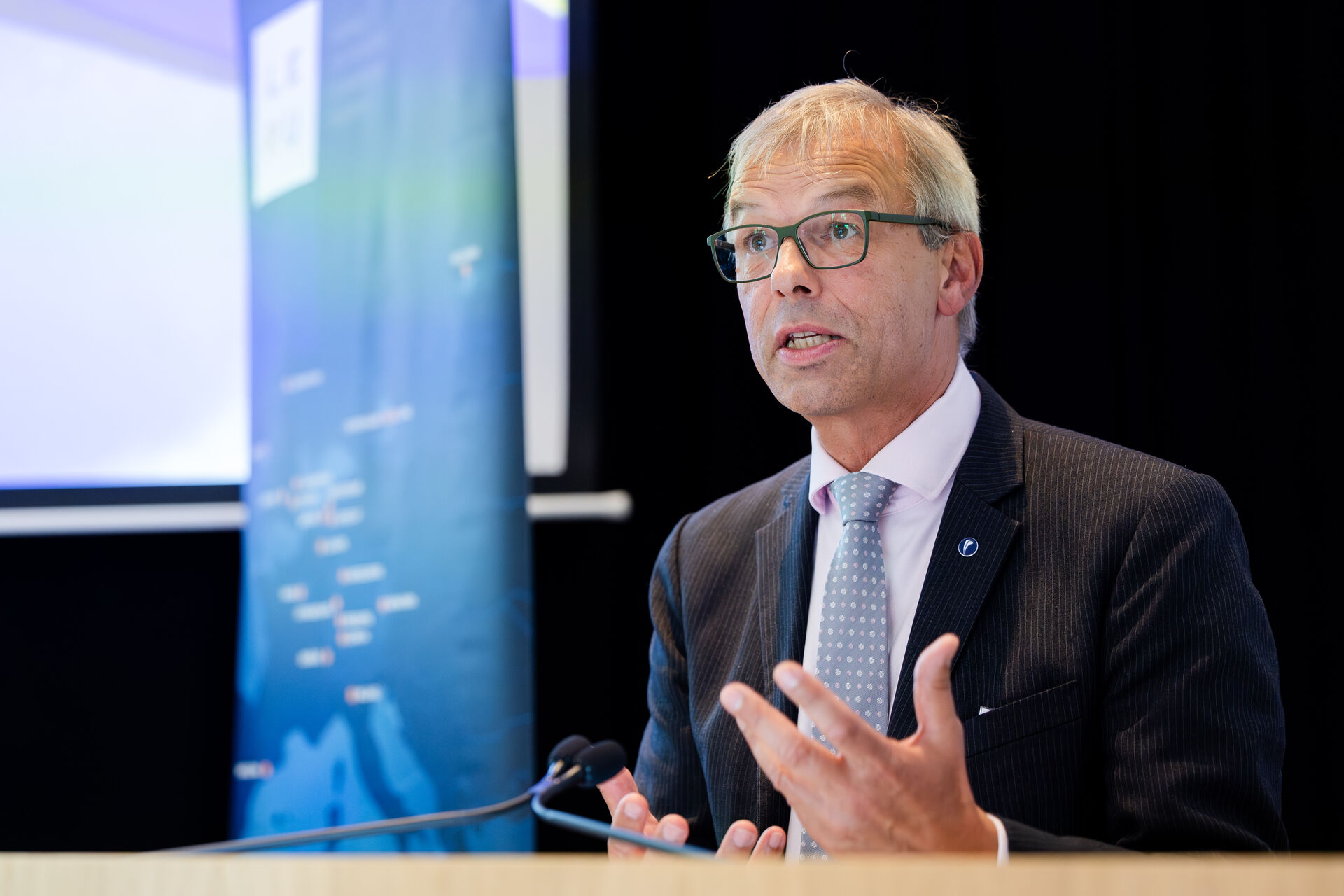
In his response, Prof. Jan Palmowski, Secretary-General of The Guild, welcomed the strong Erasmus+ proposal, and the Commission’s invitation to work with the Commission to fill it with life. He underlined the importance of Erasmus+ for universities, especially their students, and the need for its key achievements, including mobility, strategic partnerships, and European Universities alliances, to be balanced alongside each other, in complementary ways.
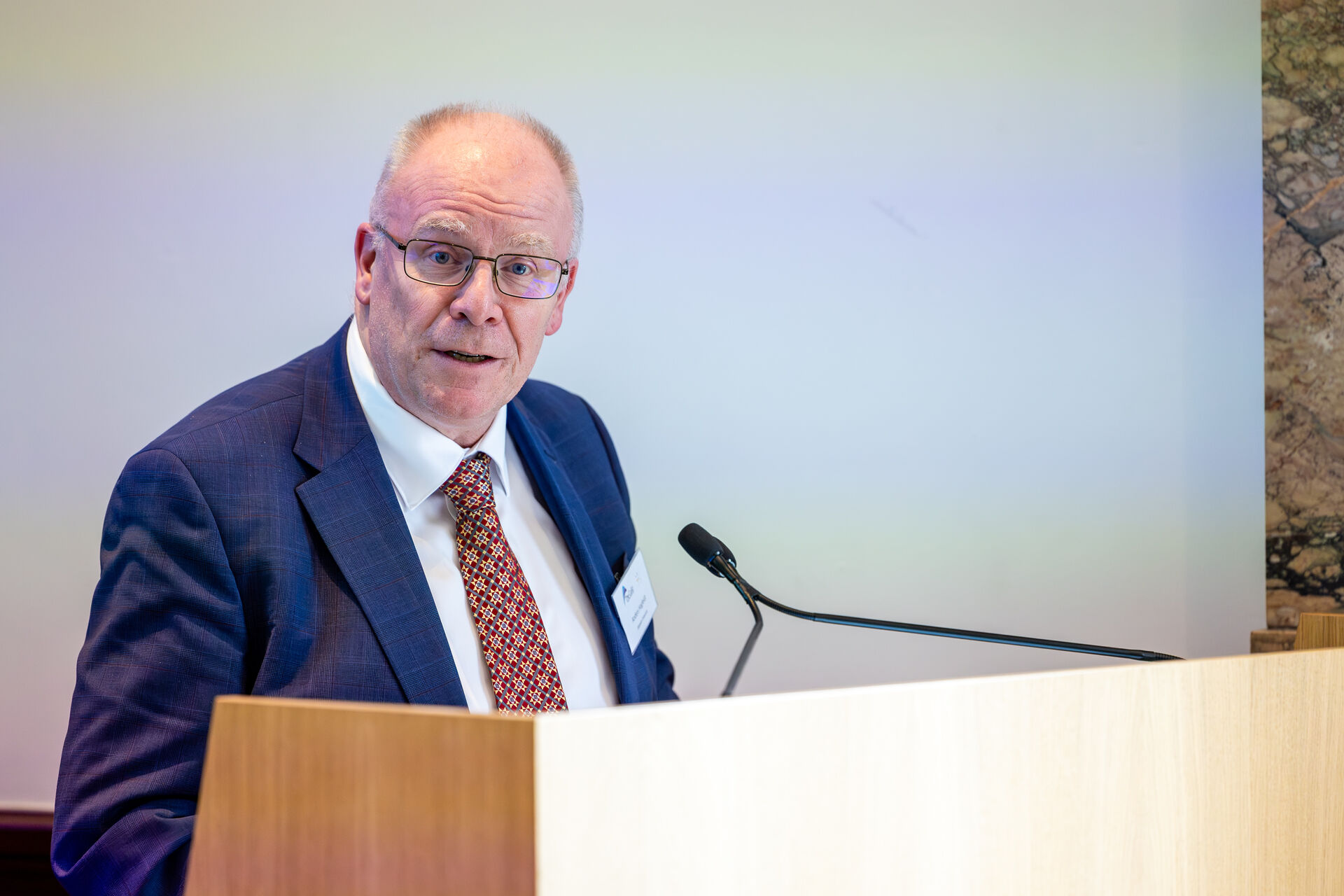
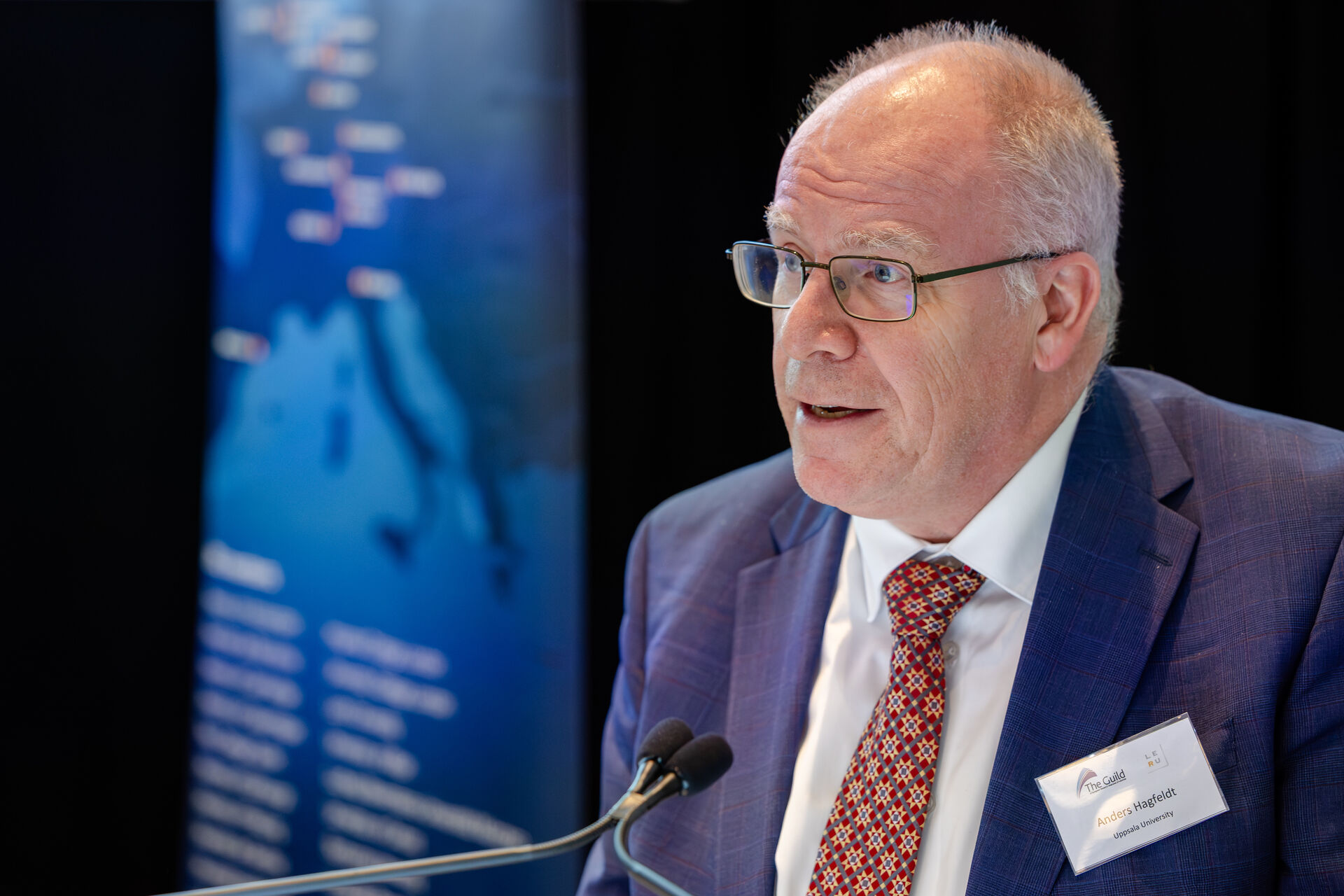
“Universities are to serve and challenge societies,” said Linda Doyle, Provost and President of Trinity College Dublin and Chair of LERU, adding that the best path to competitiveness lies in fostering healthy democratic societies supported by a vibrant R&I ecosystem. Vice-Chancellor of Uppsala University and Chair of The Guild Anders Hagfeldt concluded the event by asserting that Europe’s competitiveness will be best advanced when universities are driven by curiosity rather than political mandates.
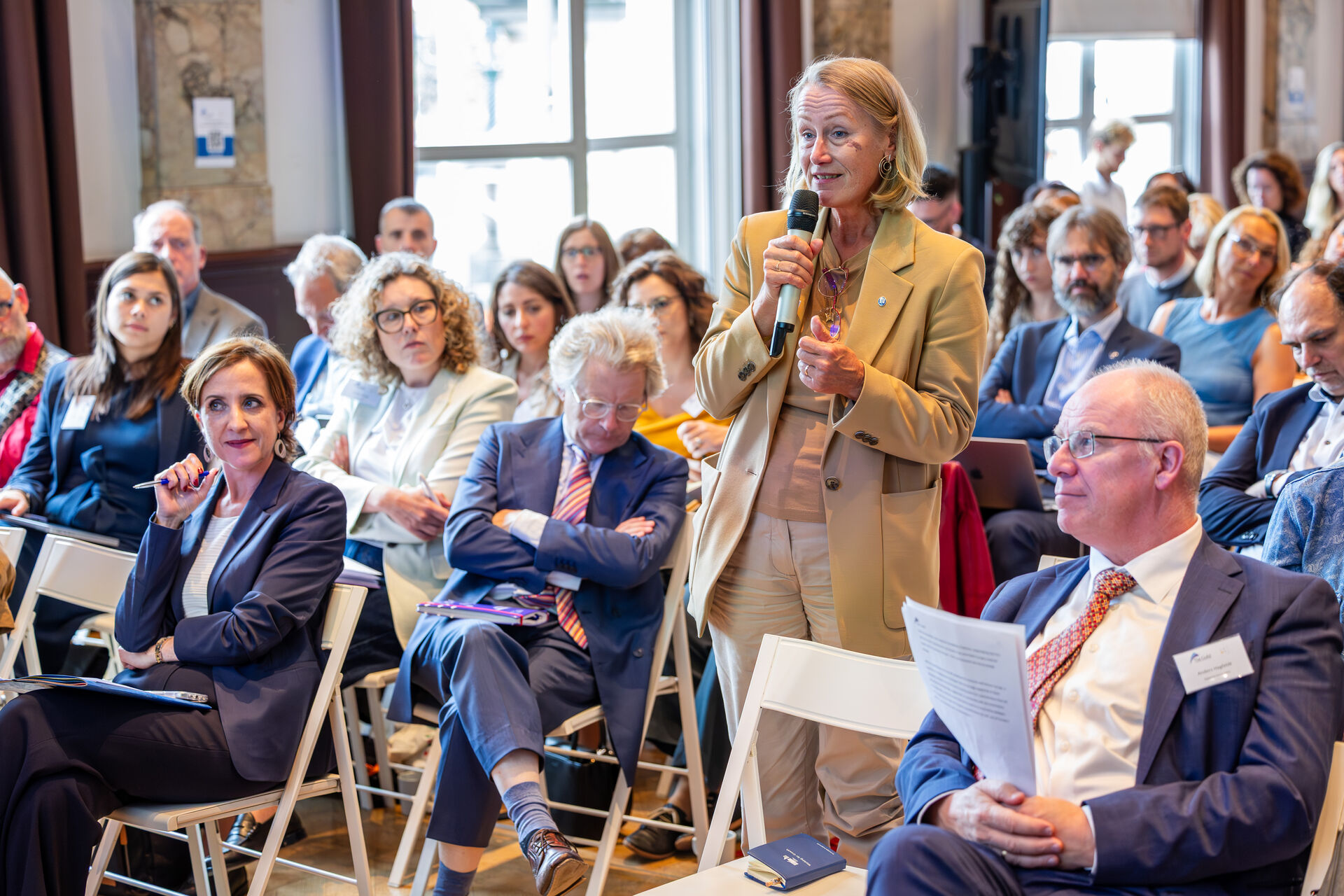
Prof. Kurt Deketelaere expressed his appreciation for Ms Minzatu and Ms Zaharieva, for their openness and their willingness to cooperate with the stakeholder organisations, now and in the future. He is hopeful for a satisfactory outcome of FP10 and Erasmus+ but expressed strong concerns regarding the ECF: it should be the delivery vehicle for FP10, not the other way around, as the draft ECF regulation now suggests. FP10 should not only be a stand-alone programme but also an independent programme. On the European University Alliances, Deketelaere expressed his disappointment and worry re the absence of a quasi-promised sustainable funding path for them. The involved universities have invested too much in them to remain even longer in uncertainty about their financial future. This will have to be solved in the following months.
This first public event where Executive Vice-President Mînzatu and Commissioner Zaharieva presented – and discussed – their Erasmus+ and FP10 proposals respectively marked an important moment for universities. The nature of the discussion set a constructive frame for our engagement with policymakers around FP10 and Erasmus+. It also provided critical insight into how these are related to other priorities of the MFF, notably the European Competitiveness Fund, as well as Global Europe. We are very pleased at the offer of collaboration, also extended by MEP Christian Ehler, and look forward to redoubling our engagement to ensure FP10 and Erasmus+ are as effective as they can be.
Jan Palmowski, Secretary-General of The Guild.
© Geert Vanden Wijngaert
© Geert Vanden Wijngaert
© Geert Vanden Wijngaert
© Geert Vanden Wijngaert
© Geert Vanden Wijngaert
© Geert Vanden Wijngaert
© Geert Vanden Wijngaert
© Geert Vanden Wijngaert
© Geert Vanden Wijngaert
© Geert Vanden Wijngaert
© Geert Vanden Wijngaert
© Geert Vanden Wijngaert
© Geert Vanden Wijngaert
© Geert Vanden Wijngaert
© Geert Vanden Wijngaert
© Geert Vanden Wijngaert