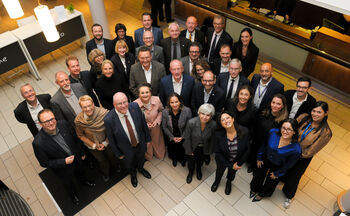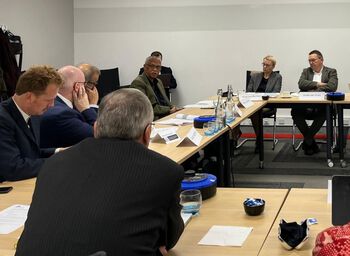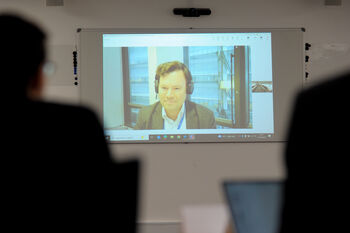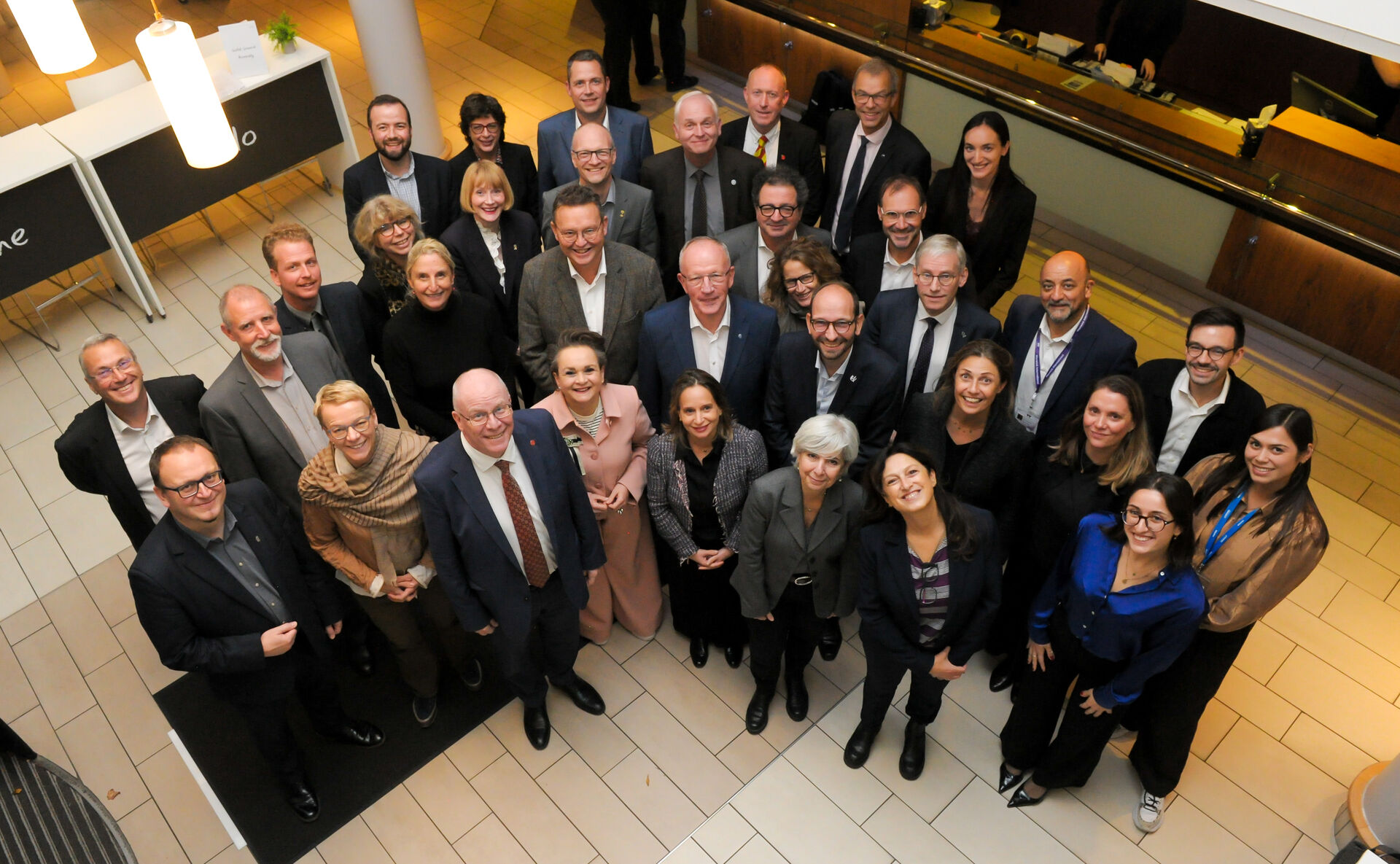
The Guild’s Presidents had the pleasure to welcome Manuel Aleixo, Cabinet Expert, Commissioner Ekaterina Zaharieva who shared that the EU’s fragmentation has the potential to become a strength. He also presented the plans on the forthcoming ERA Act. Presidents emphasised the need for FP10 to remain a distinct and autonomous programme, whilst ensuring strong links with the ECF. They also underscored the importance of preserving the bottom-up nature of the European Research Council and Marie Skłodowska-Curie Actions.
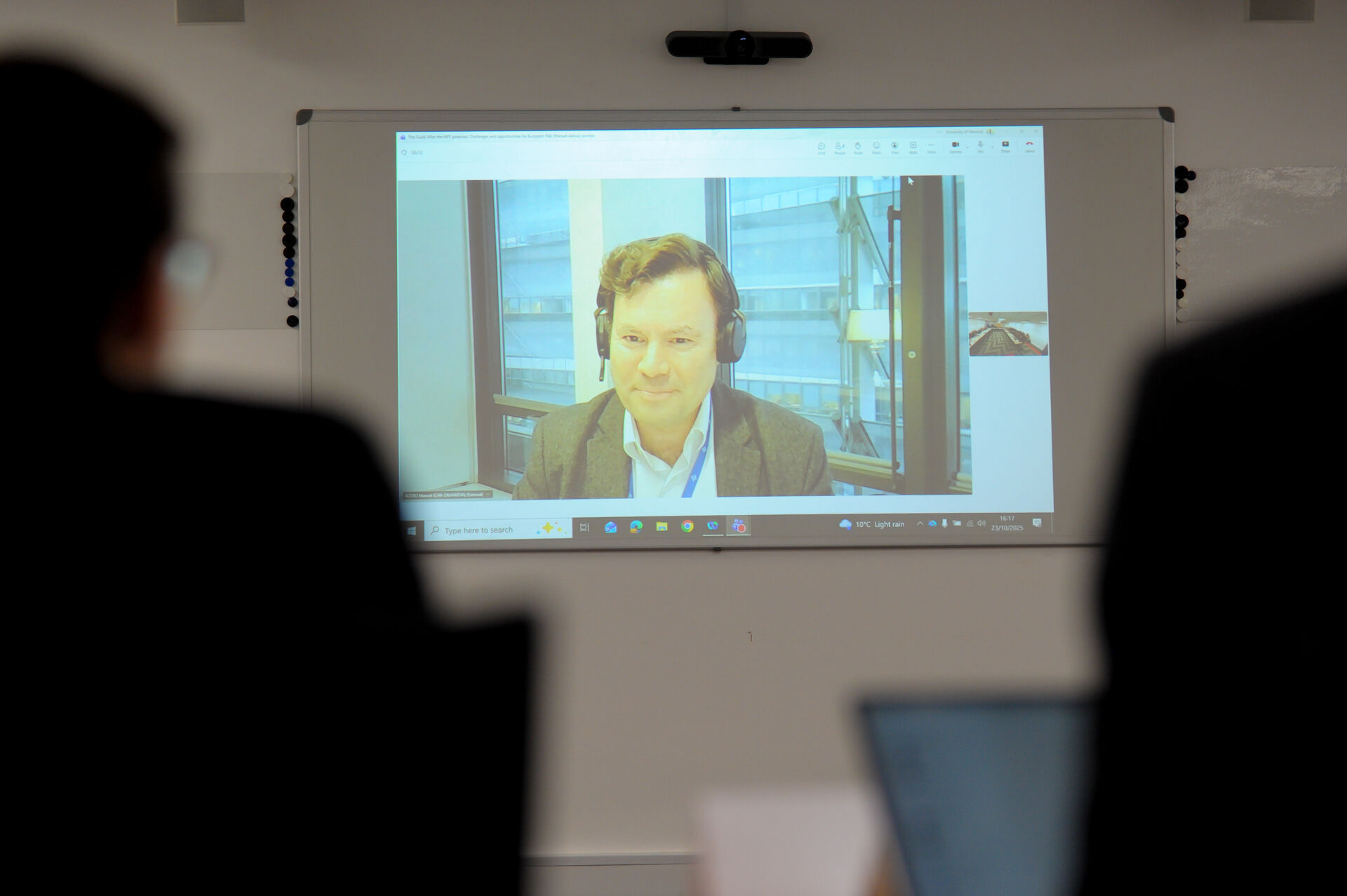
In light of evolving geopolitical dynamics, discussions on dual-use research, research security and responsible internationalisation took centre stage. They reiterated that Horizon Europe must continue to be a civilian programme, while acknowledging opportunities raised by dual use research.
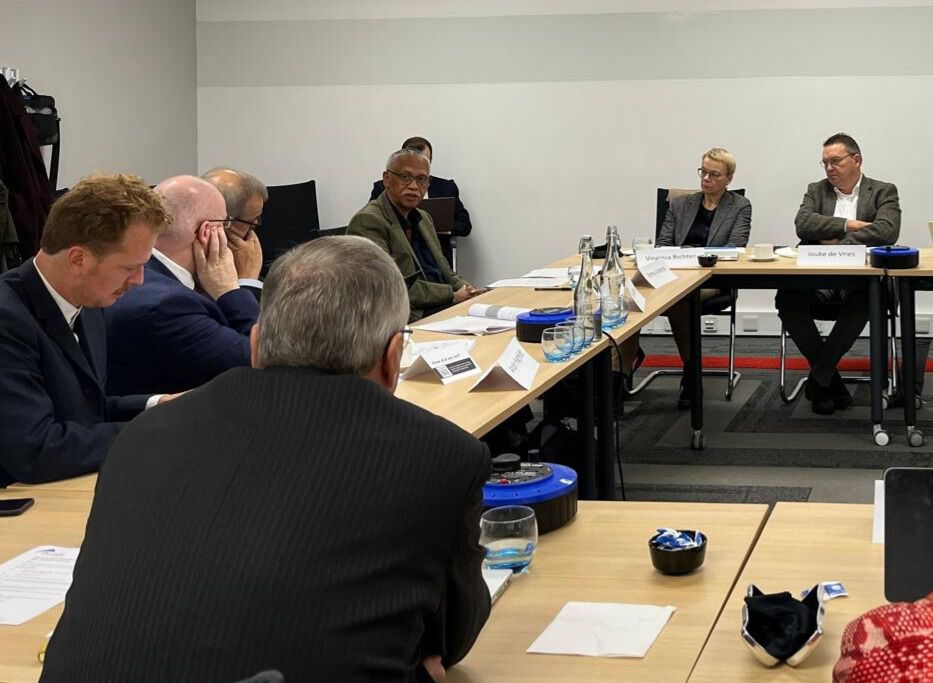
The Presidents also welcomed Jimmy Volmink, Executive Director Equity at Wellcome Trust who stressed the need to experiment with new funding mechanisms and to hold governments accountable for their commitments, all from the standpoint of equity. In the discussion, Presidents addressed the challenges of promoting balanced North-South research cooperation.
Vanessa Debiais-Sainton, Member of Cabinet, Executive Vice-President Roxana Mînzatu, joined the dialogue to discuss the pivotal role of education for Europe's competitiveness. She engaged with the Presidents in a discussion on the future of European Universities alliances, their funding mechanisms, and their connection to the ECF regulation. Vanessa shared the Commission plan to launch STEM scholarships and invited universities to help shape the initiative and achieve impact.
The Guild also had the pleasure to host Chris Johnson, Chief Scientific Adviser from the UK Department for Science, Innovation and Technology, who passionately spoke about the growing importance of this role among governments across Europe.
The reason why we need a strong FP10, a cutting-edge Erasmus+, and a Global Europe programme strengthening international R&I, is precisely to enable universities make Europe as strong as it can be. That requires policymakers to invest in these programmes and ensure they are fit for purpose, especially in how they relate to the European Competitiveness Fund. It also requires universities to live up in new ways to the added investment, for the future of Europe, and new alignments across funders, policymakers and universities on how we address our fundamental challenges, together.
Jan Palmowski, Secretary-General of The Guild
Click here to read the University of Warwick's coverage of the meeting.
.jpg)
© University of Warwick 2025
.jpg)
.jpg)
.jpg)
.jpg)
.jpg)
.jpg)
.jpg)
.jpg)
.jpg)
.jpg)
.jpg)
.jpg)
.jpg)
.jpg)
.jpg)
.jpg)
.jpg)
.jpg)
.jpg)

.jpg?alt=thumbnail)
.jpg?alt=thumbnail)
.jpg?alt=thumbnail)
.jpg?alt=thumbnail)
.jpg?alt=thumbnail)
.jpg?alt=thumbnail)
.jpg?alt=thumbnail)
.jpg?alt=thumbnail)
.jpg?alt=thumbnail)
.jpg?alt=thumbnail)
.jpg?alt=thumbnail)
.jpg?alt=thumbnail)
.jpg?alt=thumbnail)
.jpg?alt=thumbnail)
.jpg?alt=thumbnail)
.jpg?alt=thumbnail)
.jpg?alt=thumbnail)
.jpg?alt=thumbnail)
.jpg?alt=thumbnail)
.jpg?alt=thumbnail)