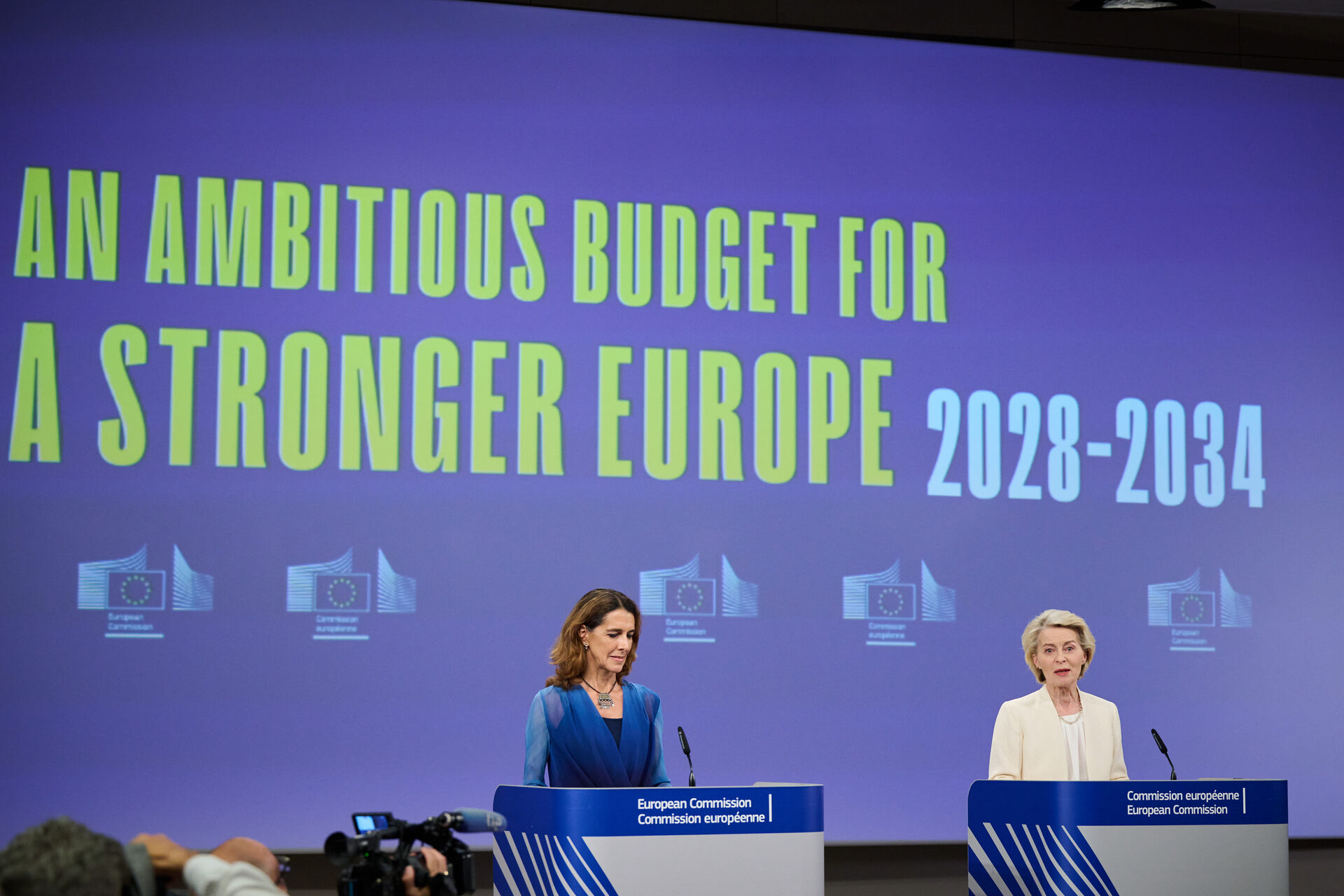
The Commission proposes a budget for the next Horizon Europe of € 175 billion in constant prices or € 200 billion in current prices. We urge the European Parliament and the Council to agree on this amount or on a higher financial envelope. Mario Draghi’s report on the future of European Competitiveness, as well as the expert group led by Manuel Heitor for the interim evaluation of the ongoing Horizon Europe, highlighted that such an increase in the framework programme’s budget is critical to boost Europe’s scientific and industrial leadership. This is also the reason why The Guild and the League of European Research Universities (LERU) called for doubling Horizon Europe’s budget in their joint recommendations for FP10 in June 2023.
We are happy to see that the European Commission has followed another of our core recommendations: to safeguard the programmes with proven success. The European Research Council (ERC) and Marie Skłodowska-Curie Action (MSCA) already demonstrated their effectiveness in pushing the frontier of knowledge and in attracting research talents to Europe. Because these objectives are even more relevant today than they were in the past, the European Commission made wise decisions to significantly increase the budget of ERC and MSCA and maintain their focus on scientific excellence. The Guild will remain attentive to make sure that the model underpinning the success of these programmes is also safeguarded: their bottom-up nature and, for the ERC, the autonomy of its Scientific Council.
The EIC Pathfinder and Transition are other instruments with proven success rightfully maintained in the Commission’s proposal. We welcome the recognition of the need to strike a balance between open and challenge calls to foster the development of innovations crucial for Europe’s present and future competitiveness. It is important that universities remain eligible for these instruments.
The European Commission also safeguarded the integrity of Horizon Europe by including collaborative and challenge-oriented R&I in the next Horizon Europe. It is indeed critical to support cross-sectoral, -border and -disciplinary research to develop the most innovative solutions and support Europe’s industrial competitiveness. Furthermore, the proposal puts in place relevant instruments to leverage researchers’ creativity in collaborative R&I: balance in terms of technology readiness levels and less prescriptive calls. The European Commission also acknowledges the need to support, in a bottom-up manner, collaborative research to address societal global challenges. We urge the Council and the Parliament to further reinforce the budget for R&I on global societal challenges and to ensure that Horizon Europe is synergistically connected to the European Competitiveness Fund and not subdue to it.
Finally, the European Commission keeps Horizon Europe open to collaboration with non-EU partners, including associated countries. It is important that the proposed provisions on knowledge security enable international collaboration in the new geopolitical context instead of preventing or limiting it. Europe cannot address global challenges alone nor build its competitiveness isolated from the rest of the world, which is why we welcome synergies between Horizon Europe (and Erasmus) and the Global Europe part of the next MFF.