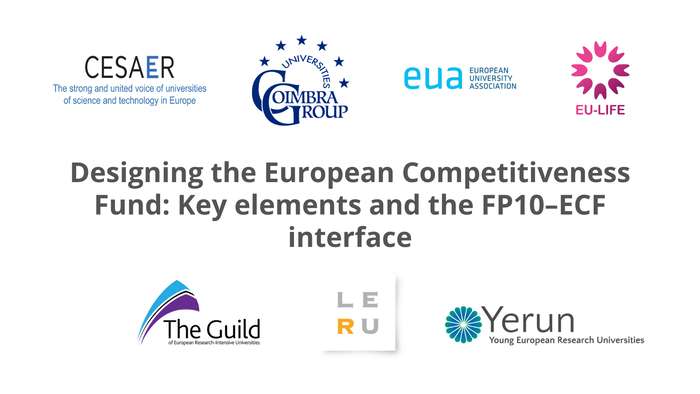
Ahead of this week’s Competitiveness Council, The Guild together with six organisations representing key universities and research institutes in Europe have joined forces to urge the Council and European Parliament, to already lay the grounds for compromise to allow for the swift launch of FP10 and ECF in January 2028.

2026 - Page 2
The Guild member universities welcome the Commission’s continued commitment to strengthen R&I capacity across Europe and the allocation of 3,3% of the proposed FP10 budget to widening measures.
The Guild shares its vision for the upcoming ERA Act, underlining that this first legally binding instrument must focus on addressing those barriers to the free circulation of knowledge that require legal redress.
On Wednesday 6 May, the ITRE committee will meet to discuss the draft report on establishing the European Competitiveness Fund (ECF). Ahead of this meeting, The Guild shares its comments on the first draft.
The Guild and the European Research Alliance for Sustainable Development (ERASuD) welcome the EU’s ambition for the Global Europe Instrument and urge EU institutions to fully unlock the potential for research, innovation and higher education in Europe’s international partnerships.
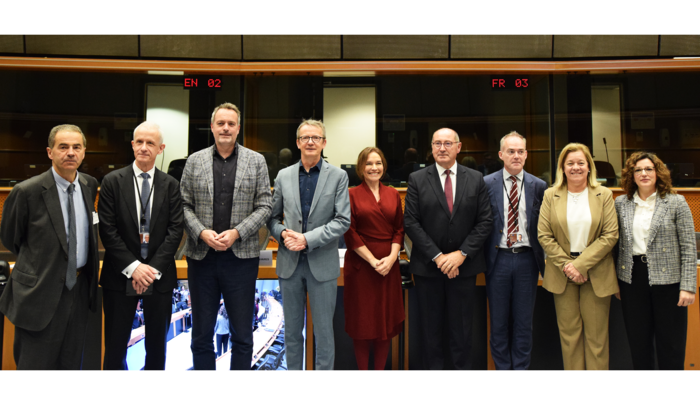
On Monday 20 April 2026, Members of the European Parliament, university leaders, research and technology organisations and industry representatives gathered at the European Parliament to reflect on the strategic role of R&I within the next Multiannual Financial Framework (MFF).
The African Research Universities Alliance (ARUA) and The Guild of European Research-Intensive Universities have joined forces with Enabel to launch a new Africa-Europe Partnership to strengthen research on mpox and Lassa fever.
Artificial Intelligence (AI) has become omnipresent in our daily lives. As one of the most powerful tools ever developed, it carries enormous potential but also significant responsibility.
The Guild is concerned that the European Commission’s proposal to apply the European Competitiveness Fund’s EU preference rules to research activities will distort international collaboration because of an unbalanced emphasis on security. In the present geopolitical context, it is urgent to strengthen international collaboration to face the ongoing power rivalry, while also protecting researchers in Europe from undue interference caused by global rupture.
On the first anniversary of the adoption of the European Health Data Space (EHDS), The Guild calls for a successful implementation at the national level to enhance cross-border health research.
On 13 March, MEP Christian Ehler and MEP René Repasi published their draft reports for the European Parliament on the European Commission’s proposals for the Horizon Europe framework programme 2028-34 (FP10). The Guild warmly welcomes their ambition for a reform of FP10 so that it can more effectively and efficiently boost Europe’s scientific leadership, competitiveness and prosperity.
In autumn last year, the Commission published its new Data Union Strategy alongside a legislative package containing proposals for the Digital Omnibus. In response, The Guild shares its reflections on the Commission’s vision and outlines key considerations for ensuring that the Strategy delivers on its ambitions.
The Guild together with six other research and innovation organisations put forward proposals of how the next Framework Programme for R&I (FP10) and the European Competitiveness Fund (ECF) should complement each other whilst preserving their respective autonomy.
The Guild has submitted its response to the European Commission’s Call for Evidence to the Action Plan for women in research, innovation and startups, highlighting the importance of including both gender and intersectional approaches in its design.
The Guild is pleased to announce its membership of the International Coalition for science, research and innovation in Ukraine.
The Guild, together with organisations representing Europe’s higher education institutions, student organisations and stakeholders, proposes a set of amendments to the European Commission’s proposal on the next programme.
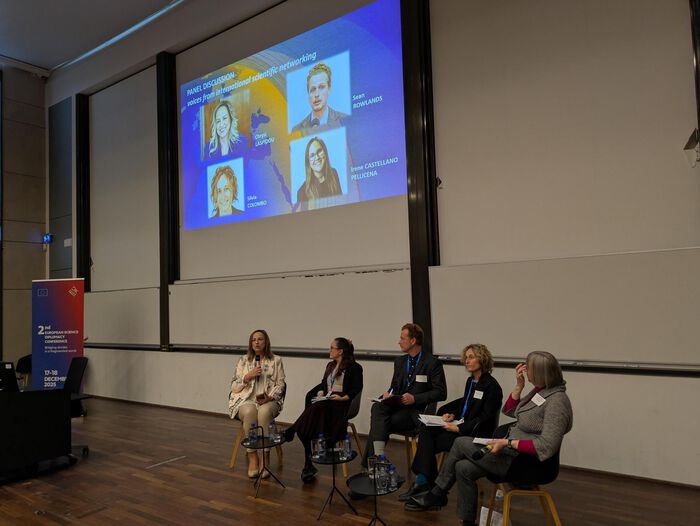
The Guild, COST, the MCAA and the U7+ Alliance call for stronger recognition of the often understated but essential role of academic and university networks in building trust, advancing science diplomacy and informing global decision‑making.
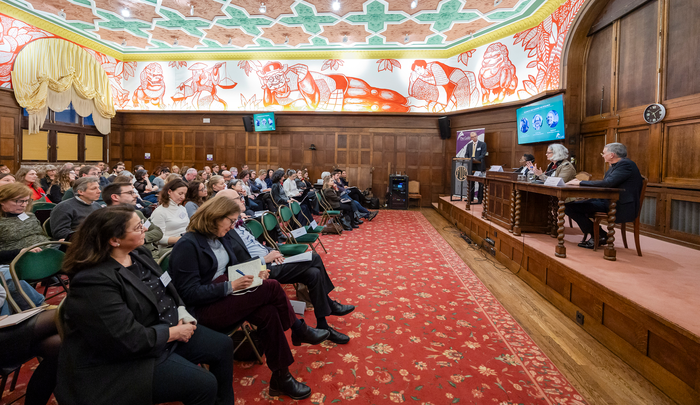
After an extremely rich discussion with our members over the last year and the broader community during the conference we hosted in Brussels last month, we now present four recommendations for alliances that have identified research as an important part of their activities.
Last week The Guild hosted the “Pilots without Pathways” conference following the publication of our latest Insight Paper on the European Universities alliances.
The Guild, together with the undersigned organisations, calls on policymakers to ensure at least €60 billion for Erasmus+ (2028-2034) in the ongoing MFF negotiations.