Shaping European framework programmes for R&I
<< Back to the Annual Report 2023-2024
This year has marked the acceleration of the planning for the tenth framework programme for R&I (FP10), running from 2028–2034. This development has taken place in parallel with the revision of the achievements of Horizon 2020, and the interim evaluation of Horizon Europe. The developments in the wider policy context of the EU, such as the EU elections in June 2024, have also set a demanding context for our work on articulating a new vision and narrative for the value of R&I when it comes to Europe’s competitiveness and the pursuit of Europe’s strategic autonomy. Likewise, questions around the increasing need to invest in research security and defence capabilities supported by innovative technologies posed new questions for universities on how to shape their role in a turbulent geopolitical environment.
Expressing our views on FP10
The Guild and LERU, the League of European Research-Intensive Universities, and their CE7 partners opened the discussion on the future framework programme with a joint public event in June 2023. The event served as a launch of the two networks’ joint statement, outlining our 10 recommendations for FP10, together with an ambitious call for a budget of EUR 200bn for the next 7 years. The collaboration represented the joining of the forces of 52 leading research universities for the first time. Marc Lemaître, the newly appointed Director-General for Research and Innovation (RTD) at the European Commission, shared his insights into the priorities related to FP10 in the invitation-only event hosted in Brussels.
After publishing our joint recommendations, The Guild’s working groups proceeded to start building their more nuanced views on the individual policy aspects related to FP10. This work resulted in the publication of a detailed FP10 vision paper in May 2024, that will set the framework for our network’s positioning in the coming years when the legislative base of the new programme will be created.
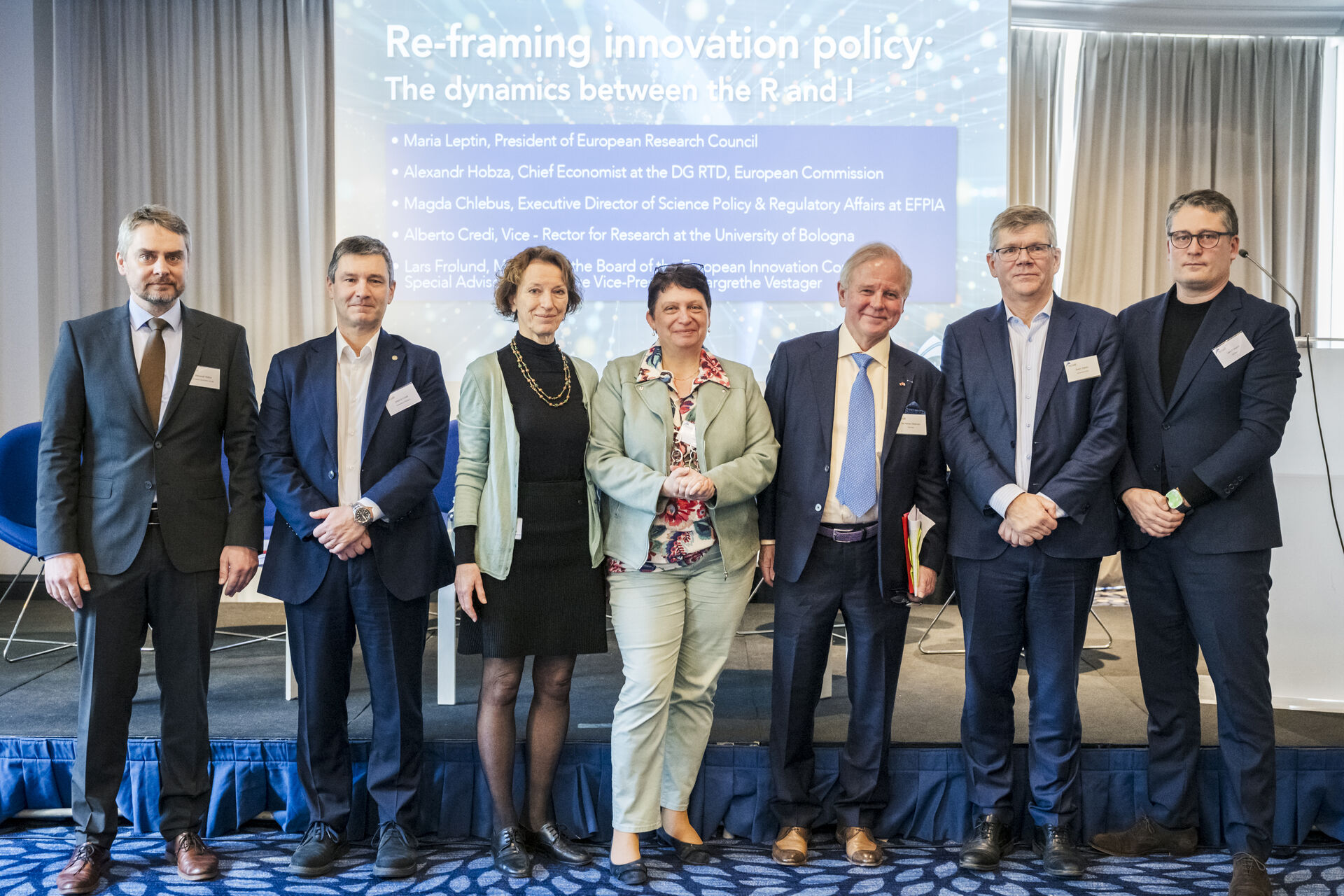
In parallel, since the beginning of 2024, The Guild has joined the fast-evolving political debate on how to articulate Europe’s competitiveness and the role of R&I and universities within it. The Guild fed into the report of Professor Mario Draghi, the former Prime Minister of Italy, by providing views on the types of investments that would further boost the competitiveness of universities. This topic was also high on the agenda of our public event “Re-Framing Innovation Policy: The Dynamics Between the R&I’’, where a panel of thought leaders representing the European Research Council (ERC), European Innovation Council (EIC), the pharmaceutical industry and our member universities fostered a debate on the need to look at our innovation policies from a new perspective. The panel called for more trust-based and tailored cooperation between academia and industry, as well as empowering research funding from the bottom-up perspective to maximise innovation outcomes.
Developing Europe’s innovation ecosystem
The Guild pursued its activities to promote a European framework conducive to a better exploitation of research outcomes. As an active member of the ERA Action 7 on Knowledge Valorisation, we provided inputs to new codes of practice on academia-industry collaboration and citizen engagement.
We continued our campaign to revise the intellectual property (IP) rules applicable to EIC Pathfinder and Transition projects. With nine other associations of research stakeholders, we liaised with the EIC Board, stressing the need for IP rules that promote collaboration between EIC inventors and their universities’ knowledge valorisation services. We welcomed the statement of the Board endorsing our position, which resulted in amendments to the IP rules in the EIC work programme 2024.
In January 2024, Ghent University invited Julien Chicot to participate in the visit of Michiel Scheffer, the President of the EIC Board. This visit provided an opportunity to meet EIC grantees, better understand the challenges they face, and re-assert the need for the EIC to adopt a more comprehensive definition of innovation and to be more than a mere instrument of industrial policies.
Securing the UK’s association to Horizon Europe
 After nearly three years of delay, the Government of the United Kingdom and the European Commission announced on 7 September at the The University of Warwick that an agreement for the UK’s full association to Horizon Europe and Copernicus had been agreed and came into force on 1 January 2024. The Guild had the pleasure to welcome Pedro Serrano, European Union Ambassador to the United Kingdom, at our Deans of Social Science, Arts and Humanities meeting at the University of Glasgow, just one of the many occasions in which The Guild’s academics and institutions stressed the importance making the most of this restored ability to collaborate. Meanwhile, The Guild continues to call for Swiss association welcoming the reignition of this process in 2024 and highlighting that an agreement needs to be concluded as soon as possible.
Other articles
Foreword by Acting Secretary-General Ole Petter Ottersen
A moment of educational change
European Research Area in action
Making new forms of Africa-Europe research collaboration a reality
Université PSL joins The Guild
Interview with Henrique Santos, Junior Policy Officer