-edit.jpeg)
“North-South collaboration remains essential, but it should emphasise mutual learning rather than one-directional training, encouraging researchers from both Africa and Europe to share knowledge by working and teaching together in each other’s contexts.”
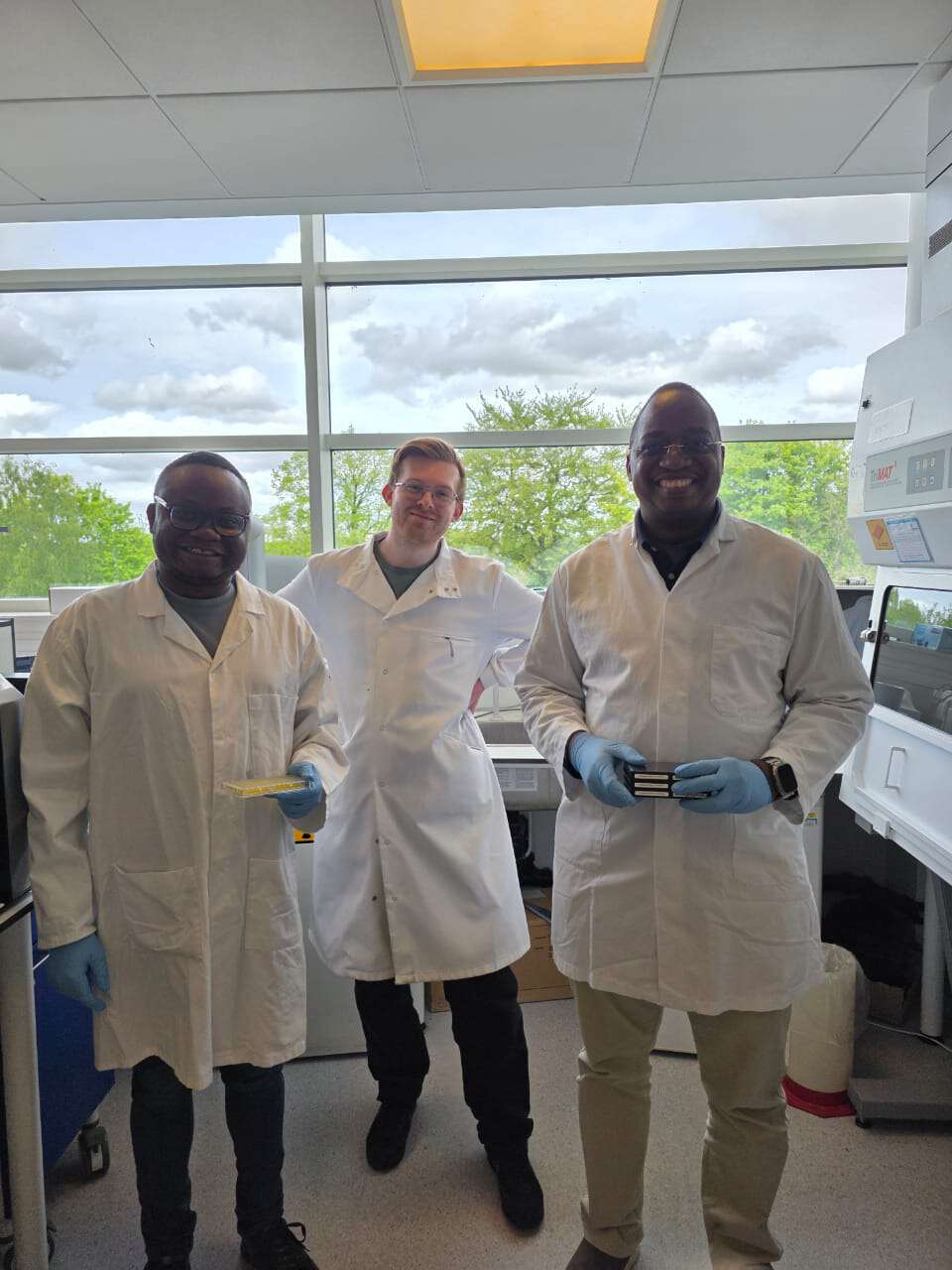
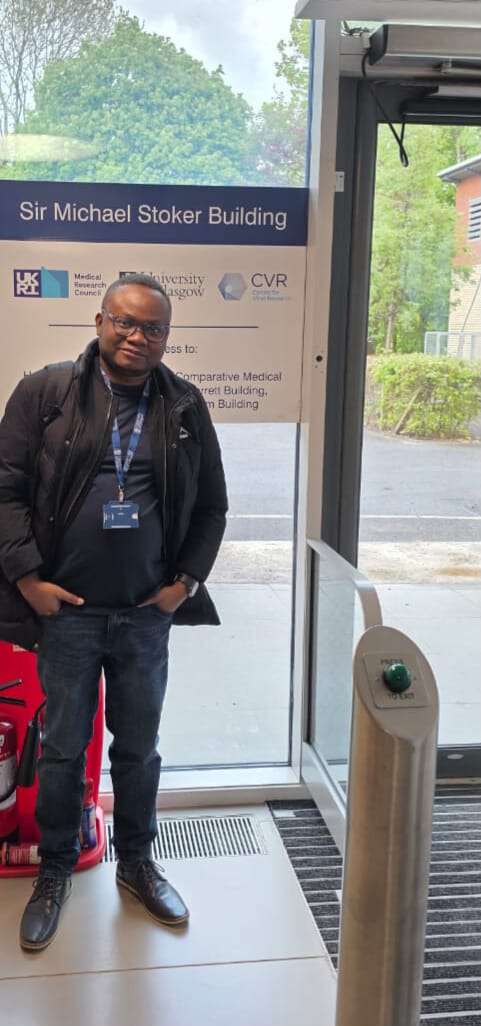
During his visit to the University of Glasgow, one of the things that really impressed Dr. Wakisa was seeing the advanced techniques for measuring immune responses and evaluating the effectiveness of vaccines. “I'm coming from the molecular diagnostics and bacterial genomics background and seeing these assays is really impactful,” he explained. But the experience also highlighted a long-standing imbalance: Much of the research on diseases prevalent in Africa is still carried out in European laboratories. Several projects in Glasgow, he noted, were using samples shipped from Africa. One of the reasons for this, he says, could be that many African researchers simply do not have access to the same technologies. “We should look at how we can best build capacity locally to be able to do the research back home instead of sending the samples all the way to Europe.”
Dr. Wakisa emphasises the importance of promoting South-South collaboration, as a lot of African researchers are currently ‘working in silos’ instead of collaborating across institutions. He also points out that even though North-South collaboration remains essential, it should emphasise mutual learning rather than one-directional training, encouraging researchers from both Africa and Europe to share knowledge by working and teaching together in each other’s contexts. The longstanding link between Dr. Wakisa’s lab and the University of Glasgow is based on a long-term effort to mirror capabilities for science in Scotland and Malawi, despite the disparities in resources. This bilateral approach has now been expanded to a network of European and African institutions, as reflected in the varied mobility visits that Dr. Wakisa and his others in the fellowship programme carried out.
The experiences Dr. Wakisa gained during his time as a fellow in Uganda and Glasgow has changed the way he thinks about translational research in the health sciences in Africa. “What I’ve learned so far is that it’s not just about collecting and publishing data, but that the data can be used to save lives”. Seeing how the University of Glasgow has developed technology that can measure the effectiveness of vaccines has inspired him to develop those kinds of technologies in Africa and to use it to work towards preventing future outbreaks rather than just measuring the effect during active outbreaks.
To better respond to Lassa fever and mpox, Dr. Wakisa stressed the importance of data coordination between governments and universities to combine efforts on outbreak investigation. In Malawi, for example, he says that they need to properly establish a transportation and management network for samples to better respond to the mpox epidemic.
Meet Dr. Wakisa
Dr. Wakisa Kipandula is a molecular diagnostics and infectious disease researcher whose work spans serology, molecular biology, outbreak investigation, and laboratory quality systems. He established Malawi’s first university-based EQA programme and contributed to genomic analyses of major outbreaks, including cholera.
Translational research project: Rapid test suitable for precise diagnosis of mpox in remote settings.
Host institutions
- Makerere University – supervisor: Prof. Damalie Nakanjako
- University of Glasgow – supervisor: Prof. Lilach Sheiner
- University of Bern – supervisor: Dr. Phaedra Simitsek
.jpeg)
.jpeg)
.jpeg?alt=thumbnail)
.jpeg?alt=thumbnail)
About the AU-EU Health Partnership
The AU-EU Health Partnership is a broad coalition from Africa and Europe working together to strengthen health systems, improve health security, and increase access to pharmaceuticals in Africa. Encompassing myriad projects and partners at the continental, regional, and country levels, the initiative is making critical contributions to ensuring healthy lives and promoting well-being for all at all ages (SDG 3). Health is also one of the pillars of the European Union’s Global Gateway strategy, which aims to boost smart, clean and secure connections in digital, energy and transport sectors, and to strengthen health, education and research systems across the world.
The partnership benefits from coordinated implementation and focuses on five interconnected themes:
- Manufacturing and access to vaccines, medicines, and health technologies (MAV+)
- Sexual and reproductive health and rights (SRHR)
- Sustainable health security using a "One Health" approach (HSOH)
- Digital health for health systems strengthening and universal health coverage (DH)
- Support for public health institutes (PHI)
Team Europe actors include the European Commission, the European Investment Bank, the European Centre for Disease Prevention and Control as well as EU Member States including Belgium, Czech Republic, Denmark, Finland, France, Germany, Ireland, Italy, Luxembourg, Malta, the Netherlands, Portugal, Spain, and Sweden.