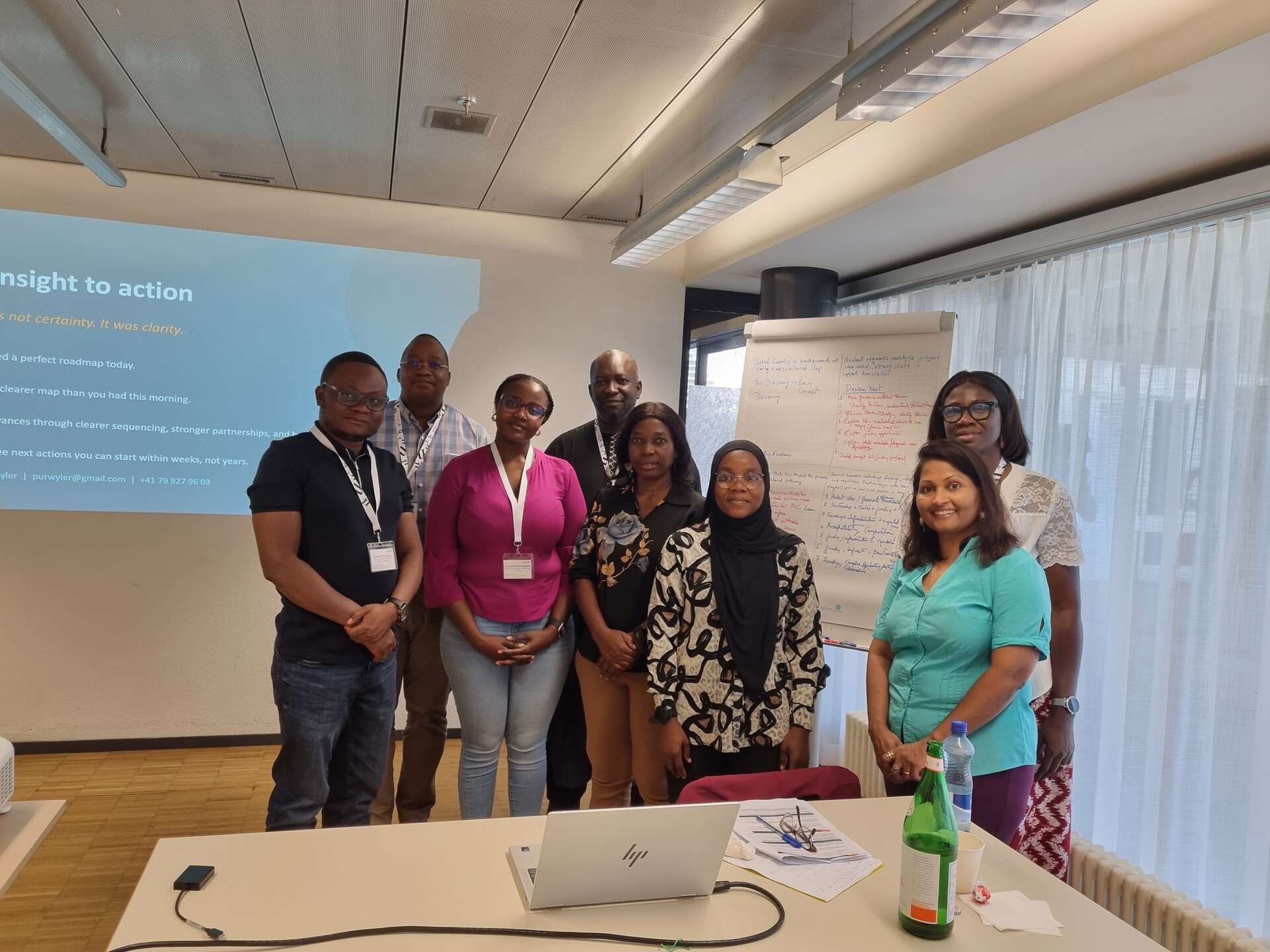
"The most important thing I've learned is that coordination and collaboration is so important for taking a research finding into something that can be used in the real world. That's what translational science is all about.”
During her stay at Makerere University, Dr. Mirriam was really encouraged to see the research being conducted by her peers in the Translational Lab. What really caught her eye was the gene extraction facilities installed there, which can be used to break down and better understand countermeasures to specific harmful cells. "If other institutions are doing this in Africa, why don’t we work together more?" she said. Looking back on the Covid-19 pandemic where a lack of advanced testing facilities was a huge issue in Africa, Dr. Mirriam hopes that better regional access to such facilities, they would not have to rely on Europe or other parts of the world to develop diagnosis products that are not precisely suited to the mpox strains circulating their countries.
Dr. Mirriam reflects on how the fellowship has really opened her eyes to the importance of good collaboration and coordination in translational research. Within the African context, however, there are still some barriers that hinder researchers in countries like Malawi to exchange samples and work with colleagues in other African countries. She argues that Africa CDC can be a good platform for strengthening collaboration between member states and to overcome some of the trust issues that are hindering collaboration today.
One of the issues when it comes to outbreak response, Dr. Mirriam says, is that researchers are being left out of the rapid response public health teams. She argues that if researchers are included from the beginning, they would be able to help to develop and deploy diagnostic kits and point-of-care (POCT) platforms that work in rural areas. Such innovations can help to detect the outbreak at a much earlier stage by reducing delays caused by transporting samples from outbreak areas to central laboratories. They would be able to isolate infected people and break the transmission cycle, reducing both the mortality and the cost of managing outbreaks.
She notes that although a vaccine is deemed safe in Europe, the vaccine might not work as well in Africa because of the different genetic makeup in population. “I've learned that indeed, if we have those locally produced vaccines tested on our own people, the efficacy and even how that vaccine works will have a greater impact than the ones that are procured outside. […] We know in Malawi when it’s cholera season and where the hotspots are in different districts. Why can't we give our people these vaccines before the rainy season comes?”.
The experiences of mobility did show how networks that connect her to regional institutions and partners in Europe help to clarify how her bespoke research back in Malawi can fit into a bigger picture of enhanced health innovation. For example, at the University of Bern she gained knowhow about intellectual property protection. With her project, she understands that strong science alone is not enough; successful translation requires planning, partnerships, funding, and implementation strategies. She also learnt that the African Regional Intellectual Property Organization (ARIPO) exists to serve as a regional platform enabling African countries to cooperate in intellectual property matters, helping researchers and innovators access patent protection more efficiently across multiple countries.
Meet Dr. Mirriam
Dr. Mirriam Ethel Nyenje is a senior public health microbiologist and health security systems expert who currently serves as Head of the National Genomics Reference Laboratory at the Public Health Institute of Malawi. Her expertise spans global health security, One Health collaboration, emergency preparedness, and translating scientific data into policy and action. She holds a PhD and MSc in Medical Microbiology from the University of Fort Hare and a BSc in Biomedical Sciences from the University of Zambia.
Translational research project: Developing point-of-care rapid diagnostics kit that can triage infections outside of Malawi’s centralised labs
Host institutions
- Makerere University – supervisor: Prof. Damalie Nakanjako
- University of Glasgow – supervisor: Prof. Lilach Sheiner
- University of Bern – supervisor: Dr. Phaedra Simitsek

About the AU-EU Health Partnership
The AU-EU Health Partnership is a broad coalition from Africa and Europe working together to strengthen health systems, improve health security, and increase access to pharmaceuticals in Africa. Encompassing myriad projects and partners at the continental, regional, and country levels, the initiative is making critical contributions to ensuring healthy lives and promoting well-being for all at all ages (SDG 3). Health is also one of the pillars of the European Union’s Global Gateway strategy, which aims to boost smart, clean and secure connections in digital, energy and transport sectors, and to strengthen health, education and research systems across the world.
The partnership benefits from coordinated implementation and focuses on five interconnected themes:
- Manufacturing and access to vaccines, medicines, and health technologies (MAV+)
- Sexual and reproductive health and rights (SRHR)
- Sustainable health security using a "One Health" approach (HSOH)
- Digital health for health systems strengthening and universal health coverage (DH)
- Support for public health institutes (PHI)
Team Europe actors include the European Commission, the European Investment Bank, the European Centre for Disease Prevention and Control as well as EU Member States including Belgium, Czech Republic, Denmark, Finland, France, Germany, Ireland, Italy, Luxembourg, Malta, the Netherlands, Portugal, Spain, and Sweden.