Svein Stølen, Rector of the University of Oslo and Chair of The Guild set the tone of the event by stressing the importance of leveraging the full potential of research to strengthen the resilience of societies in Europe.
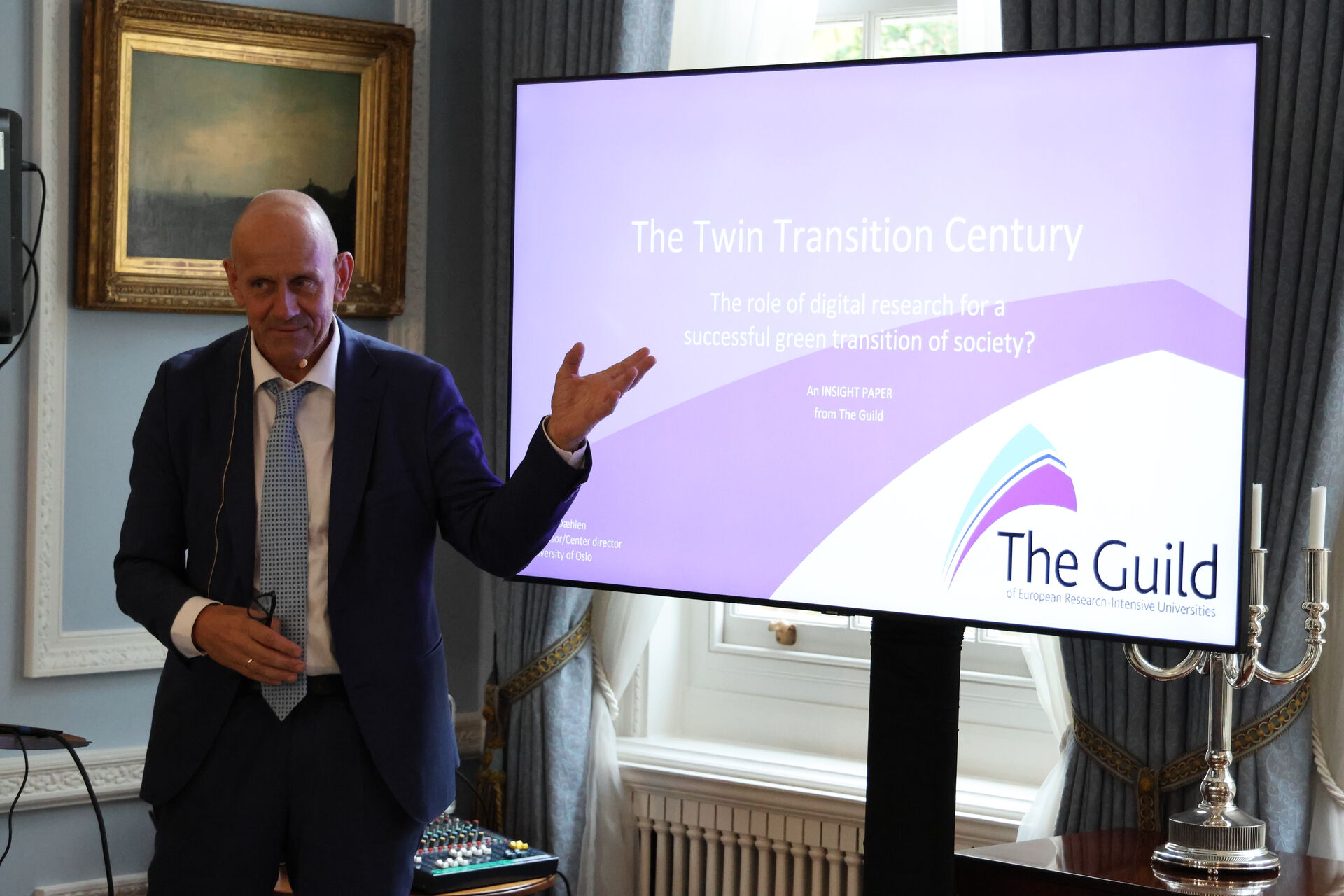
Morten Dæhlen (University of Oslo) presented his recommendations for the twin digital and green transitions and put forward a research agenda with the twofold objective of accelerating the green transition through new digital technologies and reducing the energy consumption of these technologies so that the digital transition does not to contribute to climate change.
Professor Dæhlen’s presentation was followed by comments from Marion Thain (King’s College London) and Idar Kreutzer (Norwegian Confederation of Businesses) and a panel discussion with Adrian Friday (Lancaster University), Astrid Kristoffersen (DNV) and Signe Riemer-Sørensen (SINTEF).
The panel members fully endorsed Professor Dæhlen’s idea that research must contribute to making the twin transition fair, i.e. without leaving anyone behind. Solutions cannot consist only in new technologies. A digital research agenda for the twin transitions must encompass research in social sciences, arts and humanities (SSAH). However, their role should not be limited to increasing the societal acceptance of new technologies. Cross-disciplinary collaboration must be further promoted and facilitated so that SSAH researchers fully contribute to analysing the challenges posed by the twin transitions and co-create solutions with researchers from other disciplines.
The urge for breaking silos between research disciplines should not be regarded as undermining the importance of disciplinary expertise. It is more about providing researchers with the support and incentives to develop, in addition to expertise in their respective field, the mindset and skills to work with researchers from other disciplines.
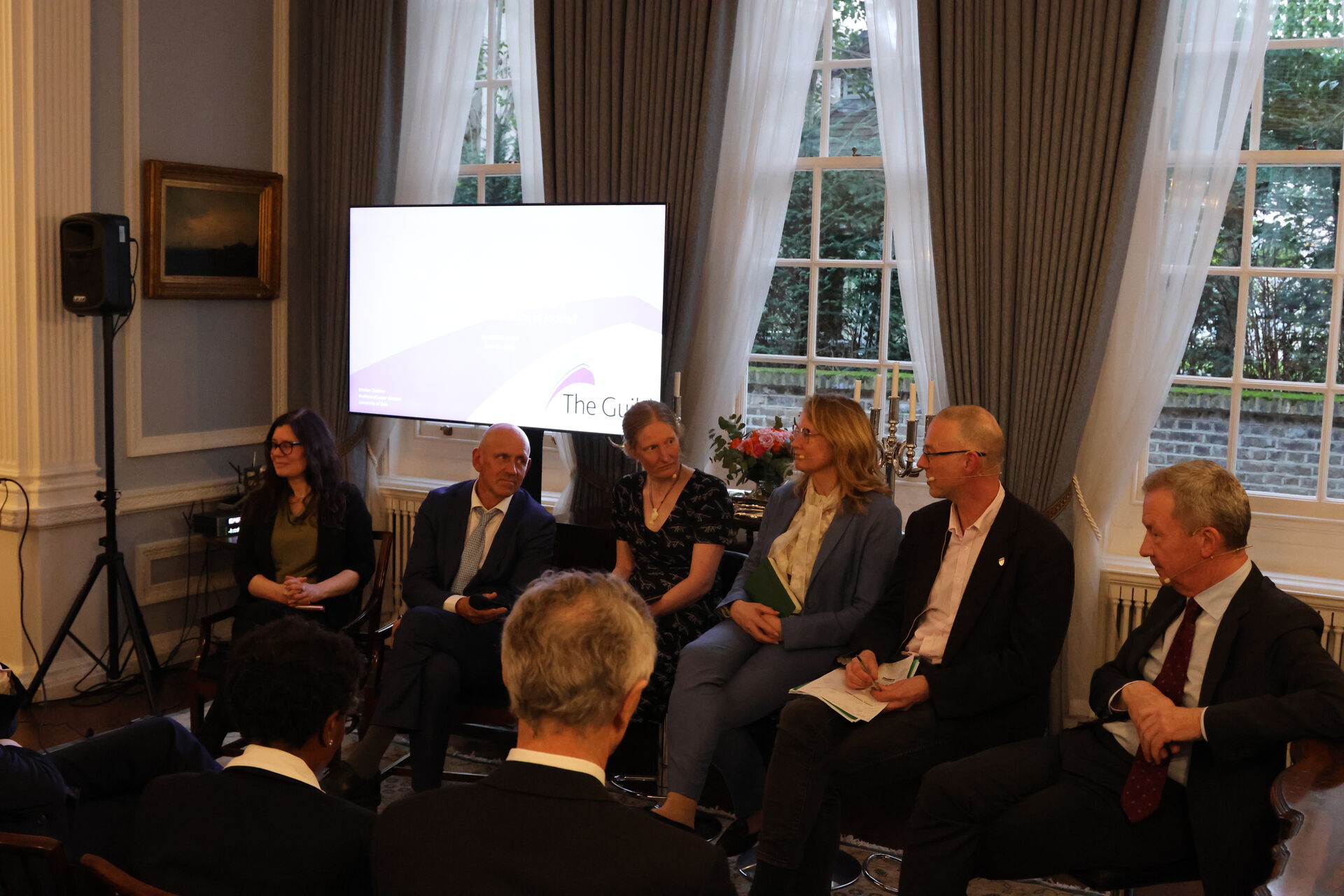
The panel also stressed the importance of cross-sectoral collaboration. While it can be relevant in some instances, technology transfer is a too reductive concept of how academia and non-academic actors could work together. The Oslo Innovation City showcases how universities, research institutes, companies and public actors can be brought together and empowered to co-create solutions for addressing challenges like climate change.
Finally, collaboration must also be encouraged across borders. In Europe, recent policy developments at national and EU level brought nuances to the idea that science is a global endeavour. The new concept of strategic autonomy as well as the growing polarisation of the global order (accelerated by Russia’s aggression against Ukraine) resulted in national governments and the European Commission calling researchers and research institutions to reconsider collaboration with specific countries and to put in place measures to prevent foreign interference and technology leakage. Instead, the research agenda for the twin transitions must reassert the need for open and responsible international collaborations.
The role of policymakers is to empower universities and research institutions to carry out a research agenda for the twin transition. However, they must do so in full compliance with the fundamental principles of academic freedom and institutional autonomy. This rules out attempts for top-down requests for institutional transformation.
Instead, policymakers should empower research organisations, including universities, to revise research assessment so that it does not focus exclusively on publications in prestigious and often mono-disciplinary journals but encourages instead researchers to further engage in cross-disciplinary research collaboration. They should also reconsider research funding mechanisms. While competition drives research quality, the growing predominance of project-based funding resulted in researchers spending more time competing for scarce funding instead of actually doing research (in collaboration with each other).
Universities should also be supported in rethinking their education curricula to further increase their contribution to the green transition by ensuring that students develop, in addition to disciplinary knowledge, transversal skills needed for the twin transition. In sum, the research agenda put forward by Professor Dæhlen and discussed in the event on 20 March called for ‘innovative’ research policies with collaboration at their cornerstone.
In their closing words, ‘Funmi Olonisakin, Vice-President of King’s College London, and Julien Chicot (The Guild) highlighted one of the main conclusions of the event’s discussion. The research agenda put forward by Professor Dæhlen goes beyond identifying research areas where further efforts could result in further intertwining the green and digital transitions and increasing their synergetic effects. More importantly, it implies rethinking research policy to foster collaboration.
This article contains a personal reflection of the event by Julien Chicot. Read a full recap of the event on the website of the University of Oslo’s dScience.

Photo credits: © Christoffer Hals, dScience - Centre for Computational and Data Science