The EU’s programme for research and innovation has become an increasingly important framework for the University of Oslo’s (UiO) research. From a modest start in the third Framework Programme for Research (FP) in the early 1990s, to halfway through Horizon Europe, things have only moved forward. So far in Horizon Europe, UiO’s researchers have had 77 applications approved, which amounts to almost EUR 45 million in EU support. Together with NTNU and second only to SINTEF, UiO is one of the three largest Norwegian actors in Horizon Europe. Our success rate is growing. So far, no less than 25% of all project applications from UiO to Horizon Europe have received support.
Participation and success in the research and innovation programme does not happen by itself. Behind each of the projects that have received support (and those that have not) lie hard work and intense collaboration from our researchers and the support apparatus. The Norwegian authorities’ decision to join the framework programmes is of decisive importance for UiO’s collaborative relationships and networks, both within and outside of Europe. Just look at the unfortunate situation that research in Switzerland and the UK is in now without access to the programme. The part played by UiO researchers in the “European fabric” is also completely dependent on the structure of the framework programme. For each transition from one multi-year programme to another, there is a struggle to define the content and structure of the programme. What kind of research should the programme support? Which topics should be prioritised? How strong should guidelines be in defining issues? And not least, what should be the balance between funding basic research versus market-oriented research on predefined topics.
Now we are at yet another crossroads: results from the first part of Horizon Europe are to be evaluated. The experiences so far must be included in the second half of the programme. Work on the future Framework Programme for research and innovation begins. Past, present and future are connected in an opportunity for input. We seize that opportunity – as UiO and as part of the Guild of European Research-Intensive Universities. This input helps to give direction to the debate on the way to the next Framework Programme (FP10). Our four main messages are:
- Strengthen cutting-edge research excellence in Europe;
- Create a better balance between research and innovation in the Programme;
- Horizon Europe Pillar II needs collaborative projects across institutions and disciplines
that are not expected to deliver market-ready products and that do not operate with unrealistic expectations of "impact" in the short term;
- Without perspectives and findings from the social sciences, law and humanities, together with interdisciplinary projects, we are not equipped to contribute effectively to solving major societal challenges.
Excellent science
When the European Research Council (ERC) was established and incorporated into the Framework Programme in 2007, it was a watershed for UiO and the research-oriented universities in Europe. Completely new opportunities opened up for financing pioneering and curiosity-driven research. For UiO’s researchers, this has had an enormous impact: approximately 75% of applications and approved projects are funded by ERC and other projects under the pillar for Excellent Science. ERC accounted for around half of the funds from H2020 to UiO. There has been a doubling in the number of ERC projects since the previous framework programme. UiO now receives as much funding from the ERC as UiO did in total from the entire 7th Framework Programme. Compared to the acceptance rate in our national research council’s programme for excellent science, UiO’s researchers are more successful in Horizon Europe.
We know that each and every one of the ERC awards is very likely to generate research that will leave a lasting mark, and research that dares to break new ground. The money is of course important, but the ERC distributes more than funds – it distributes scientific reputation and sets the standard for the assessment of research. We also notice that the pattern in the awards from the ERC confirms UiO’s strong position in the humanities and social sciences. The ERC has become a standard for many EU member states in how to assess and allocate research funds to the research front – which increases the risks but the potential to get more in return is higher. It is vital that the independence of the ERC’s scientific council is ensured. It is the key to success for the ERC. All in all, this has been a success story and an unrivalled way of future-proofing research’s contribution to our common knowledge readiness, scientific competitiveness and, not least, making it more attractive for the best talents to invest in a research career. The same also applies to the well-established scheme for mobility – Marie Sklodowska Curie Actions (MSCA). Here, too, UiO’s communities have done remarkably well. Just a few days ago, the news came that the Faculty of Humanities alone had received a total of nine projects in this part of the pillar for excellent science. MSCA has become an integral part of the career policy and efforts to develop strong professional environments. Our advice to the Commission in this regard is that the implementation of these arrangements should address the practical obstacles that still make it difficult to talk about a European research area with a free flow of knowledge. The next framework programme will make a European research career more attractive if some of the obstacles to mobility and career paths in Europe are better handled – for example, funding should be included for a fourth year where PhD programmes have a four-year course.
Multiple perspectives
For UiO, the ERC is still the largest source of income from the Framework Programme: globally, in Horizon Europe almost 57%. Pillar II is designed to solve major global challenges and enhance a competitive business life. UIO’s researchers are also involved in this part of the programme with 24 projects, particularly within health, ICT, and the cluster aimed at humanities and social science research fields. This has also previously characterised UiO’s involvement in this part of the framework programme. For future research funding within this part of the programme, it will be important to have announcements that make it attractive for leading researchers to participate. We call for the inclusion of the social sciences, law and the humanities in problem formulation, as they provide independently enriching perspectives for projects financed under Pillar II. The cluster for culture, creativity and inclusive society must increase its share of the budget. For example, it is questionable to finance large projects on artificial intelligence or the transition to a circular/greener economy without also having a perspective on how technology development takes place within a societal and democratic context. On the whole, questions about democracy and the sustainability of social institutions in major transformation processes should become a core part of Pillar II – the humanities and social sciences are more than “icing on the cake” on other people’s projects. They should be an integral part of the research for the major global societal challenges.
Balance
In the transition to Horizon Europe, excellent science lost part of its share of the total budget, despite its success. More than half of Horizon Europe’s funds go to challenge-driven collaborative projects. How this part of the programme is organised determines the orientation of the entire Framework Programme. The balance between research and innovation can be shifted in various ways. The concept of excellence can be watered down and subsumed under the requirement that the research must have a short path to commercialisation. As The Guild points out, the experiences from Pillar II in Horizon Europe show that the relationship between research and innovation must be better balanced. If the consideration of technological maturity becomes dominant (“technology readiness level – TRL”), the Framework Programme will become more of an innovation programme than a research programme. We also need a more realistic understanding of the “impact”of the research. If this understanding becomes too narrow and applicants are required to give unrealistic specifications of what research projects can achieve in the short term, this part of the Framework Programme becomes less interesting for Europe’s leading researchers. The hyper-complex problems that Europe is facing require collaborative projects between different research environments without the requirement that they conduct research close to the market or research that can easily and in the short term be translated into technological solutions or into policy and regulations. Collaborative projects with a basic research orientation and at a low TRL level (1-2) can in the long run be completely ground-breaking for technological innovations and as a contribution to the system changes that are necessary to solve global societal challenges.
Missions
The tool “missions” – major social challenges – was one of the new elements in Horizon Europe. Norway is also planning to implement a similar initiative for two themes – sustainable nutrition and a social mission to get children and young people integrated into education, social and working life. The preliminary experiences in the EU indicate that there is a long way to go before this is a fully functioning contribution to the framework programme. The research component must be strengthened and clarified; funding of activities must not be taken from the research budget if it does not go to research. In order to achieve that, there must also be transparency in how these funds are distributed and which criteria it measures.
The framework programme in the next stage
Horizon Europe’s measures for an Innovative Europe are gathered under Pillar III. UiO currently does not have many activities in this part of the framework programme, nor in the newly established European Innovation Council (EIC) or the European Institute of Innovation and Technology (EIT). The EIC’s role in promoting innovation in Europe will be part of the discussion leading up to the forthcoming Framework Programme. It is also connected to the discussion about the Framework Programme’s future structure. Also in research policy, the power of definition can be decisive for the actual design of measures. UiO must continue to be part of a vibrant and demanding European research landscape. This means that we must also help define what the ideological basis for future funding opportunities should be. Sometimes it is actually the case that it is “the thought that counts”.
Read The Guild's input:
Lessons learned and way forward: The Guild’s recommendations for Horizon Europe | 22 February 2023
This article was originally published by The University of Oslo.
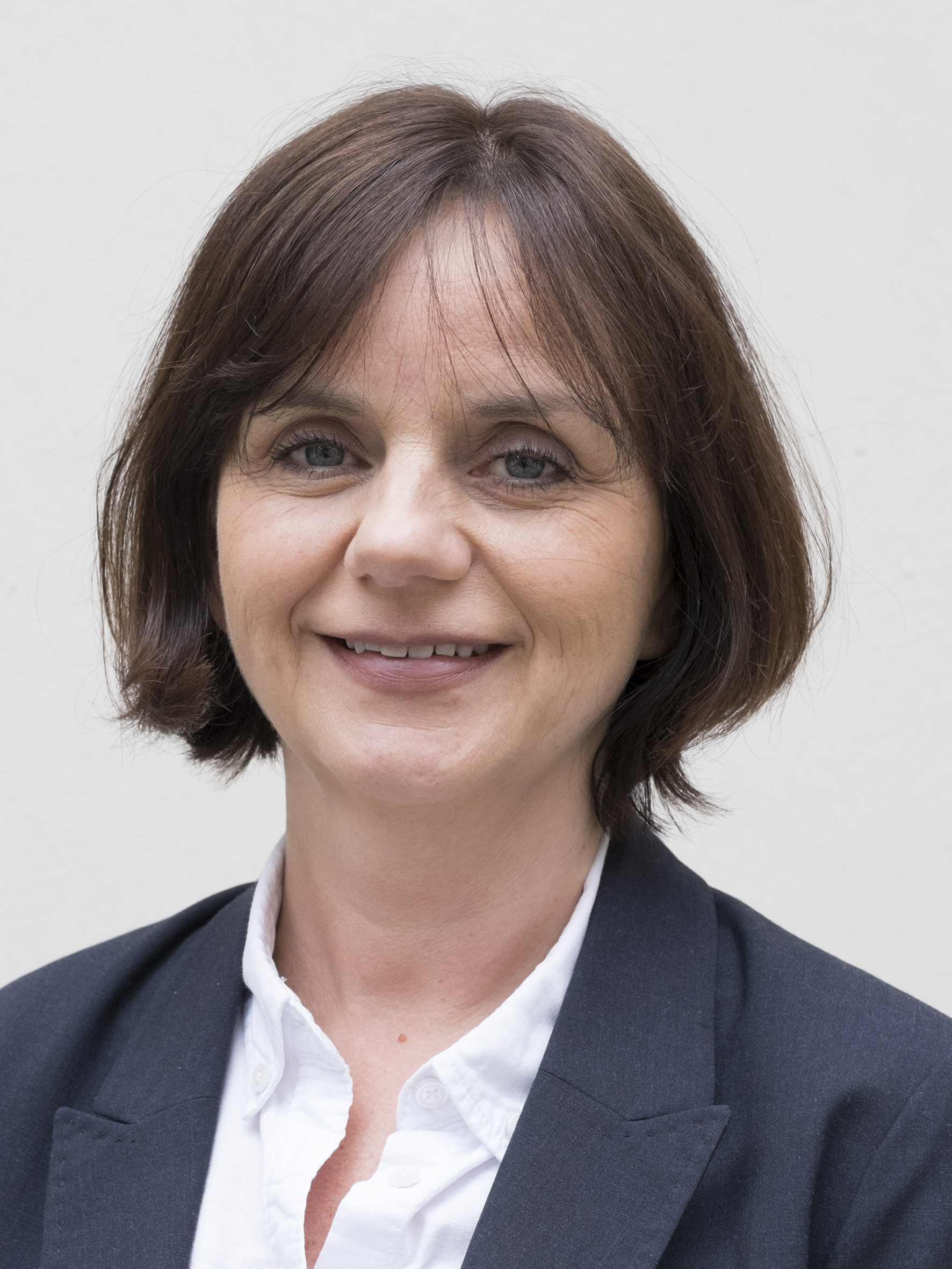
Åse Gornitzka
Åse Gornitzka is Pro-Rector of the University of Oslo for the period 2021-2025 and a professor at the Department of Political Science at the Faculty of Social Sciences. She has a degree in political science from the University of Oslo and a PhD from the University of Twente in the Netherlands (Faculty of Public Administration). She has been a researcher at the Arena Centre for European Studies since 2004.