After nine years with The Guild of European Research-Intensive Universities, there is no doubt that the development has been both good and important. From the newborn network's first steps, The Guild has grown to become one of the most influential advocacy networks in Europe.
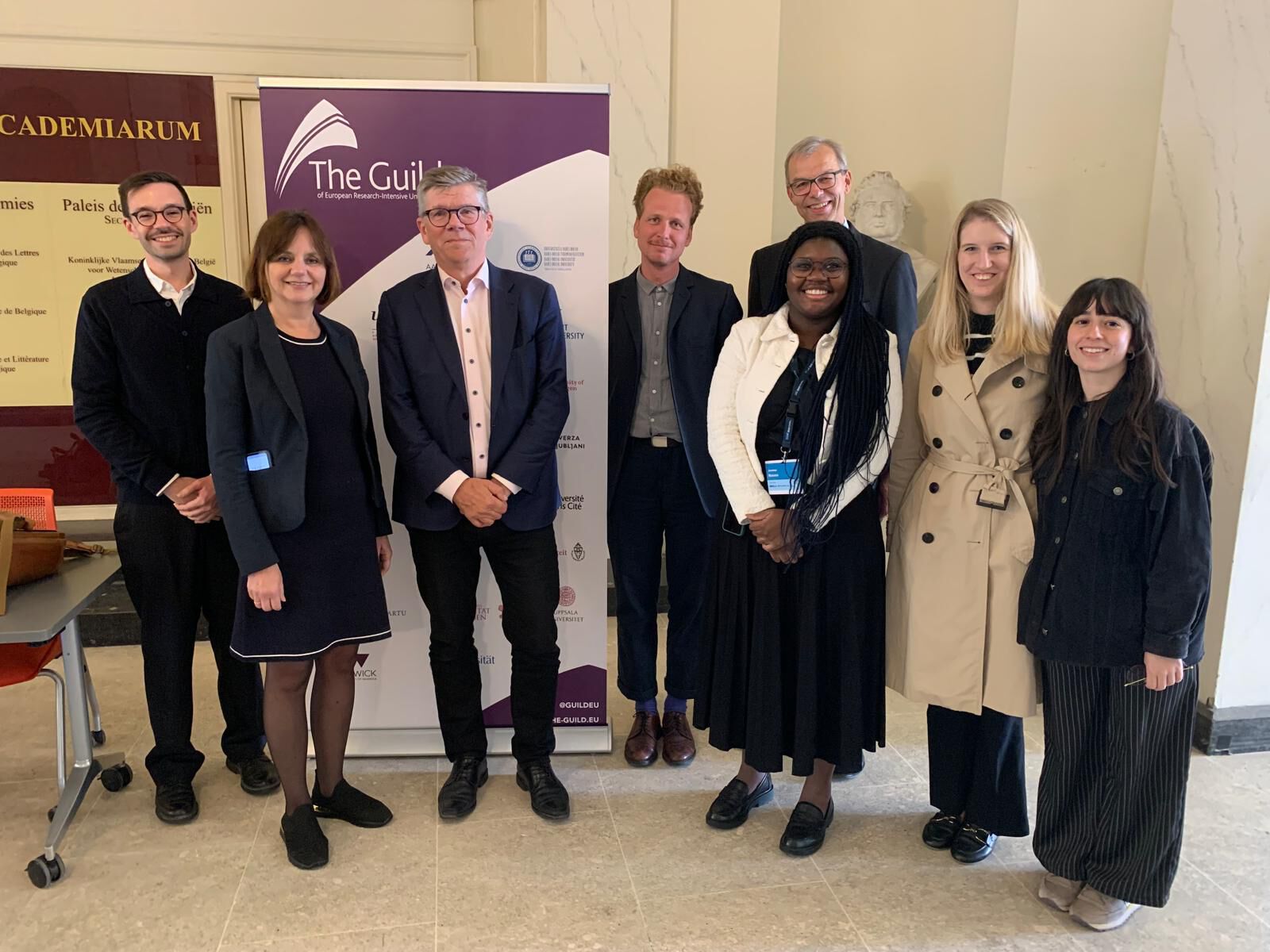
The year is 2016, and it is autumn. The Guild of European Research-Intensive Universities comes to life in Brussels. The university network is born into a landscape densely populated with organisations established to influence EU policy across the European Union's many areas of activity. Research and higher education are no exceptions. The Guild brings together universities that share common interests and perspectives on the role of universities in Europe and on the significance of Europe for the universities.
Over time, 23 universities from 17 different countries have become members of The Guild. They are among the most prominent on the continent, with outstanding research, a research-intensive profile, and a strong commitment to being a clear voice for academia, researchers, and students.
Why did we need such an organisation?
It is well-documented that the European Commission prefers to engage with organisations that operate at the European level rather than having to listen to hundreds of individual actors and national interest groups when policy is being shaped. At the same time, there is an abundance of interest groups at the European level in the field of research policy. Transnational organisations that represent different professions and disciplines, national research funding bodies, associations of Europe's higher education institutions, industry organisations, as well as business interests. We needed a voice for research-intensive universities and for fundamental, curiosity-driven research.
The Guild members came together as a diverse group with a common identity. The network is a strong advocate for research excellence, the pursuit of truth, trust in research, and for new scientific knowledge that benefits society and builds trust and economic growth. The Guild was also keen to include strong research-intensive universities from parts of Europe where R&D investments are relatively low.
As it turned out, The Guild managed to secure a very important position in Brussels. Such an achievement does not happen by itself. When we took over as the rectorate at the University of Oslo (UiO) eight years ago, former UiO rector Ole Petter Ottersen's clear message was: Take care of the newborn. He was also part of its creation.
We quickly became deeply engaged in The Guild's governing bodies and working groups.
A speedy growth and "youth phase"
An excellent secretariat in Brussels, led by Secretary-General Jan Palmowski, is the main explanation for why The Guild’s growth and “youth phase” progressed at record speed. The secretariat's expertise, political acumen and responsiveness ensured that the organisation was taken seriously by the Commission and other key actors from the very beginning.
UiO could not have had a better "Europe Office." All Vice-Presidents meetings, Board meetings, and General Assemblies have also been meetings with key EU decision-makers. In this way, UiO has been able to help develop common positions and draw on experiences and insights from others. Key factors have been close relationships with an exceptionally competent secretariat and a strategic geographical location for good meetings between actors with shared interests. The point is not merely to arrive at predefined positions and find the lowest common denominator, but also to develop joint standpoints and arguments. With The Guild, we have moved from being "policy takers" to becoming "policymakers."
Together with like-minded universities, we have engaged in a number of issues, often very early on in the policy process. The past eight years have been exceptional in terms of the speed and intensity of the role that Europe has taken and received. It is indeed true that “what happens in Brussels doesn’t stay in Brussels.” National research policy agendas are influenced by what happens at the EU level.
Issues that ten years ago would have been unthinkable to raise are now taking significant space on The Guild's agenda – including:
- Reform of the evaluation of research.
- Scientific publishing and the controversies surrounding Plan S.
- The intensified conversation about academic freedom as a living principle.
- Relations with non-EU countries, where Brexit, Switzerland and the EEA are key topics.
- Cooperation between European and African universities based on a model for long-term, multi-institutional, and equal collaboration across a wide range of disciplines.
An important actor in shaping Europe of Knowledge
Today we once again stand at various crossroads for Europe as a knowledge society and as a participant in a global scientific system. Right now, there is intense discussion surrounding the EU's negotiations and tug-of-war over the EU's long-term budget. What should the framework for future research and development programs in the EU look like? What are reasonable, effective, and legitimate ways for European universities to contribute knowledge to solve major societal challenges? How can defence and security policy considerations be addressed without undermining the premises and dynamics of science? Which institutions and mechanisms from Horizon Europe will survive the transition to a new long-term budget for the EU?
The Guild is present in the conversation, alert and informed, engaged and active. The need for an organisation like The Guild will certainly not diminish given the developments in the global political and economic order. It requires that the member institutions nurture their collaboration well.
We started eight years ago with the call to take good care of the newborn – that call remains and continues in the coming years for a Guild that has come of age.
The Guild is needed as an adult and mature voice when shaping the Europe of Knowledge.
This article was originally published in the University of Oslo's rectorate blog.