In many Widening countries, researchers lack funding to build research labs and research groups. Even when young people wish to come back to their home country, there aren’t enough career possibilities. Europe’s research and innovation framework programme could help by offering more than just networking opportunities through the Widening measures, such as grants to start small-scale collaborations.
The aim of Widening measures, as defined in Horizon Europe Work Programme 2023-2025, is to tackle the innovation divide and move to a more integrated and cohesive European research and innovation ecosystem. “Research and innovation policy can only ensure excellence at the European level if every country and region progresses,” it says.
And while funding and participation of Widening countries has increased in recent years, the innovation gap is growing since the leaders are moving faster than others. As demonstrated by the European Innovation Scoreboard 2023, the performance differences within the group of emerging innovators have not narrowed and they are not catching up to the next group of moderate innovators.
To make a true difference, Widening measures should no longer mainly deal with institutional capacity building and developing international research networks, but focus on supporting top-level researchers and research cooperation, which will lead to an increase in participation in all parts of the framework programme.
There is a lot of well-educated talent in the Widening countries. This talent does not just need “access to excellence”, but to improve performance as scientists, strengthening institutions and countries in turn. Scientists must be empowered to increase their own capacities as researchers and leaders. In the end, it is about making better use of Europe’s entire talent pool.
Better connected
Another area where the Widening measures could be improved is that they should be used to speed up strategic changes at national and institutional levels. It is important that the measures are more aimed at promoting excellent research and innovation cooperation, are better connected with other parts of the framework programme and with co-financing from other sources, like Cohesion Policy funds.
Also, increasing participation should no longer mean active participation and success only in Widening measures, but involving the best Widening target group competencies in all parts of the framework programme, including taking a leading role in solving important R&I challenges in the region or field.
Looking forward to Horizon Europe’s successor, FP10, due to begin in 2028, Widening measures must be continued. It is true that some Widening instruments have worked better than others, and we should address this, but there is still a clear need for EU level support to close the R&I gap and achieve more cohesion in Europe.
The discussion should not focus on excellence versus Widening. On the contrary, researchers from Widening countries that I work with through the Alliance4Life consortium or my colleagues from The Guild of European Research-Intensive Universities, agree that we need to defend the excellence principle in the EU’s framework programmes.
The only way to maintain the programme’s scientific leadership in research and innovation is by supporting the best talent. Widening actions can help to boost success in European Research Council grants as a key benchmark of scientific quality.
Alliance4Life’s recent survey on the use of Widening instruments in top EU-13 biomedical research institutes indicated many positive impacts: improved scientific cooperation, better grant writing skills and administrative capacity, increased mobility of researchers, ability to attract top scientists from abroad. Many universities involved in the survey emphasised changes towards a more internationally open research culture because of involvement in widening projects.
Estonia, by way of example, has been very successful in ERA Chairs applications, with seven ERA Chairs established at the University of Tartu. Last year we also opened two Teaming centres of excellence in bioengineering and personalised medicine. In Estonia, 80% of public research funding is competitive and that is why research group leaders are motivated to apply for framework programme funding.
This shows that Widening measures are working, but not fast enough or well enough.
For FP10, we must make sure the instruments are more focused and aligned with the needs of the Widening countries and the whole European Research Area. Given the competitiveness of global science, we cannot afford the potential of science in many parts of the EU to be underdeveloped. And we must avoid a two-speed European science.
In the long run, the aim of the Widening measures is to get rid of the need to make a difference between Widening and non-Widening countries. One by one, the countries will considerably improve their performance and phase out from the Widening group. It will take some time and much work, but eventually there will be an integrated and cohesive European research and innovation ecosystem in the EU.
This article was originally published by Science Business.
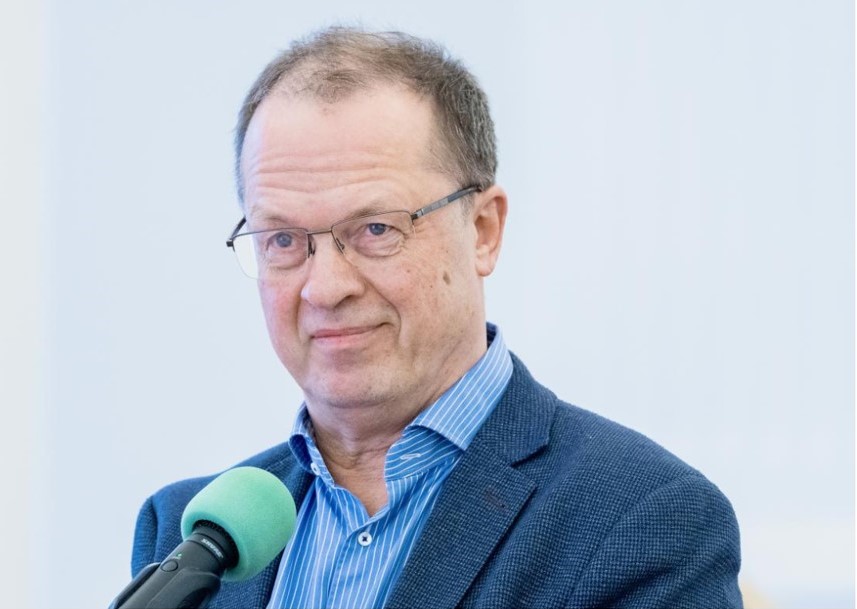
Toivo Maimets
Toivo Maimets is a Professor and Chair of Cell Biology at the Institute of Molecular and Cell Biology at the University of Tartu. He is also Vice-Chair of Alliance4Life and a member of The Guild's working group on Widening Participation. Previously, he was the Minister of Education of Estionia (2003-2005). He has also been a member of several international research organisations and advisory groups, including European Commission Research, Innovation and Science High-level Expert Group (RISE), European Molecular Biology Conference (former president), Science Europe (former member of Board) and European Science Foundation (former member of Board). He is a member of European and American Associations for Cancer Research and Academia Europaea. He is also member of the European Medicines Agency Committee of Advanced Therapies and has served as a member and vice-president of UNESCO International Bioethics Committee (IBC 2004-2011). His research interests concern characterisation of intracellular signal transduction pathways responsible for cell cycle regulation, DNA damage control and tumorigenesis.