The European Union’s new College of Commissioners takes office on 1 December, at a time of deep uncertainty around what the next framework programme (FP10) will look like.
The hearings with the new commissioners-designate in the European Parliament, held over the past few weeks, were intended to shed further light on the commission’s plans. Unfortunately, the two-minute limit on responses helped the commissioners-designate avoid detail on difficult issues. Still, the hearings did confirm some of the key issues that the commission must grapple with immediately.
Ekaterina Zaharieva, commissioner-designate for start-ups, research and innovation, impressed with her responses. They leave no doubt about her commitment to implementing the key recommendations, published in October, of the expert group on FP10 led by the former Portuguese science minister, Manuel Heitor. She advocated boosting the European Research Council (ERC) and pledged to fight for increased research and innovation (R&I) spending, both through FP10 and at national level.
Zaharieva also underlined Heitor’s admonition that too much of researchers’ and evaluators’ time is currently wasted on complex applications with unacceptably low success rates. But while endorsing his call for simplification, she did not outline whether the commission would follow his recommendation to keep civilian and dual-use research separate from defence research. She acknowledged only that FP10 – unlike its predecessors – will be open to dual-use.
In our minds, the lines between what is and is not dual use are increasingly blurred. The real question is whether, as Heitor suggests, there will be a clear difference between civil and defence funding, and how this distinction will be managed.
Zaharieva’s answers left no doubt about her stance on the most important issue for FP10: whether, as with previous iterations, it will be an integral programme, with proposals decided largely according to scientific excellence. She clearly wants it to be. But, strangely, MEPs did not press her on how that sits with reported discussions in commission president Ursula von der Leyen’s inner circle that apparently envisage FP10 as a collection of instruments, along with many others, in a “Competitiveness Fund” that the commission would deploy according to the president’s political priorities.
This question also should have been asked of Stéphane Séjourné, the designate executive vice-president (EVP) for prosperity and industrial strategy, to whom Zaharieva is expected to report. But it wasn’t. Séjourné instead spoke at length about the proposed competitiveness fund’s potential to leverage more private investment and to support companies that would otherwise relocate to the US to scale up – research barely got a mention.
By contrast, Henna Virkkunen, the designate EVP for tech sovereignty, security and democracy, was highly articulate on research and innovation. The planned AI Research Council would bring together the best researchers, and she underlined the importance of fundamental research for key areas such as AI and quantum computing.
But Virkkunen left no doubt: her focus is on the EU’s technological sovereignty and security. Her core concern is how best to pool resources and bring together breakthrough research and innovation to support Europe’s industries, public sector and military.
The hearings, then, have reinforced our sense that there will be big changes afoot for FP10 in terms of its political direction, technological focus, impact and openness to military research. Several big questions now need answers.
Apart from whether FP10 will be an integral programme based on excellence (ideally, with simplified rules of participation to attract the best researchers), we also need to know if the commission will sustain the ERC’s scientific autonomy and model the European Innovation Council board on the ERC’s Scientific Council.
This was recommended both by Heitor and by Mario Draghi’s recent report on European competitiveness, and was endorsed by Zaharieva in her hearing. Autonomy is crucial for both bodies’ effectiveness, and it is in the commission’s own self-interest; it should be easy to commit to.
Moreover, given the commission’s razor-sharp focus on Europe’s competitiveness, will FP10 still be designed to push the frontiers of science? The MEPs were preoccupied with how to increase participation of small and medium-sized enterprises in FP10 and how to help Europe’s existing industries, such as nuclear, automotive or steel. But as Heitor shows, competitiveness can be secured only if Europe invests in groundbreaking technologies.
This raises a further question: is European industry, society and leadership ready for the required technological transformations? What will be the societal and political consequences if Europe embraces the AI revolution, for instance, as Draghi urges us to do? The MEPs appeared unconcerned about this, yet it is crucial, not least for their own political survival. FP10 must support research and innovation that help Europeans embrace change effectively.
Finally, how will the need to increase both European competitiveness and resilience affect funding priorities? Will we see calls prioritised that maximise dual-use potential? Alternatively (or additionally), will we see evaluation criteria offer a bonus for presenting a funding proposal’s dual-use potential? What impact would such changes have on universities’ established international partnerships?
The greater the changes to the framework programmes envisaged by the commission, the greater the need for discussion, testing and consultation with universities. With the publication of the next Multiannual Financial Framework (MFF) due in the summer, the window of opportunity is closing fast.
We need urgent answers from the commission on its plans. FP10 cannot work without those for whom it is intended – those at the front line of research.
This article was originally published by Times Higher Education.
Related content:
The Guild's Open letter to Commissioner-designate Zaharieva
The Guild's other open letters to candidates of the new College of Commissioners

Jan Palmowski
Secretary-General of The Guild – A contemporary historian, he started his career at the University of Oxford before moving to King’s College London where he taught European politics and EU integration. He was Pro-Vice-Chancellor at the University of Warwick from 2013 to 2017. In this blog space, Prof. Palmowski engages with some of the wider questions around research, education, innovation and the EU. The views expressed here are his and not those of The Guild.
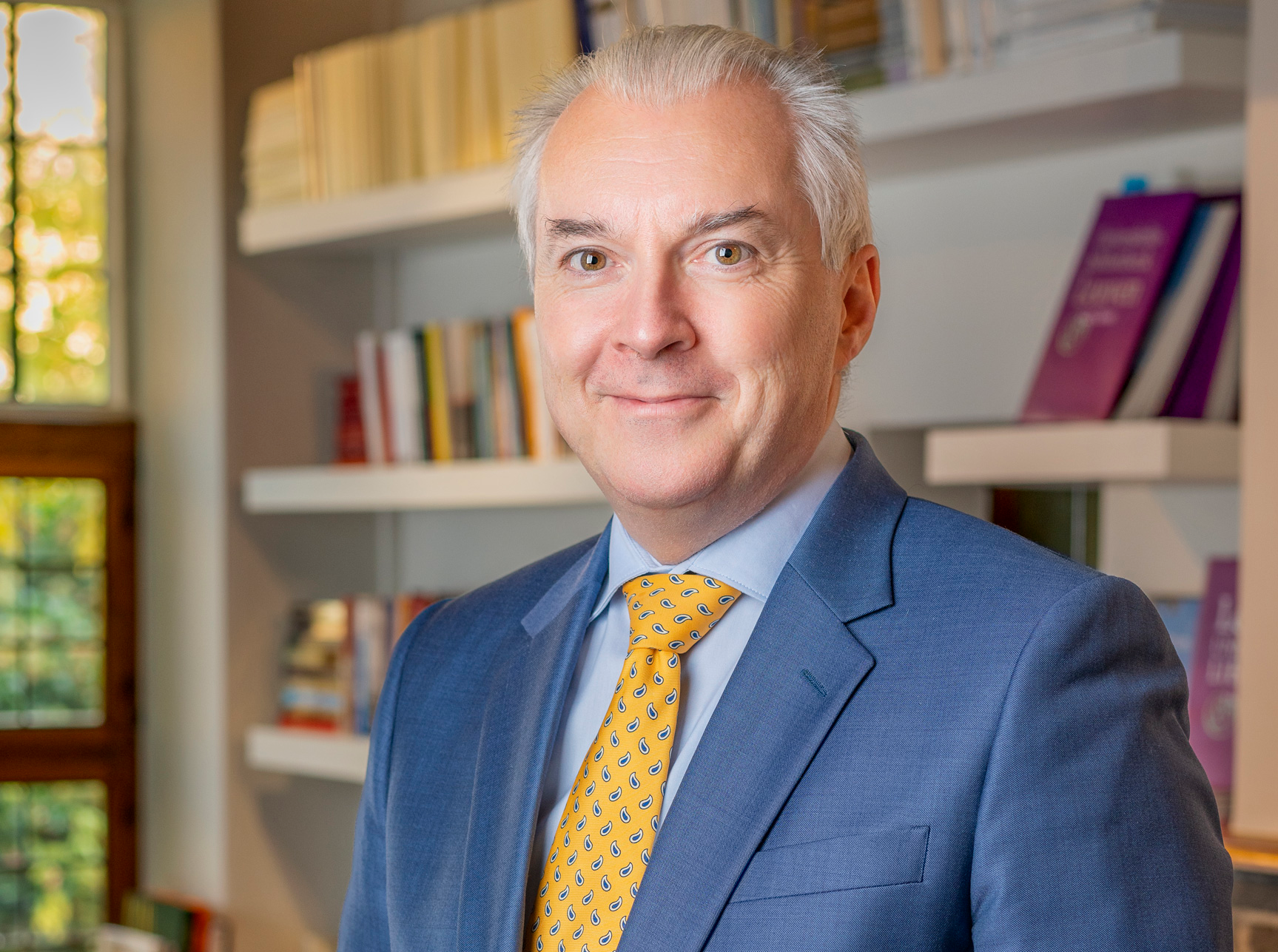
Kurt Deketelaere
Kurt Deketelaere is the Secretary-General of the League of European Research Universities (LERU), an association of twenty-one leading research-intensive universities. Before joining LERU, he was the chief legal advisor (2004-2007) and the chief of staff (2007-2009) of the Flemish Minister for Public Works, Energy, Environment and Nature.